Guide
Can you use a shoe cabinet in another room?
A shoe cabinet is a shallow box with adjustable shelves, which makes it useful well beyond the front door. The depth and the published load ratings decide which room it can actually do a job in.
#ad — We earn a commission from qualifying purchases made through the Amazon links on this page, at no extra cost to you. It does not change what we recommend or the order we rank it in. Full disclosure.
Can a shoe cabinet go in another room?
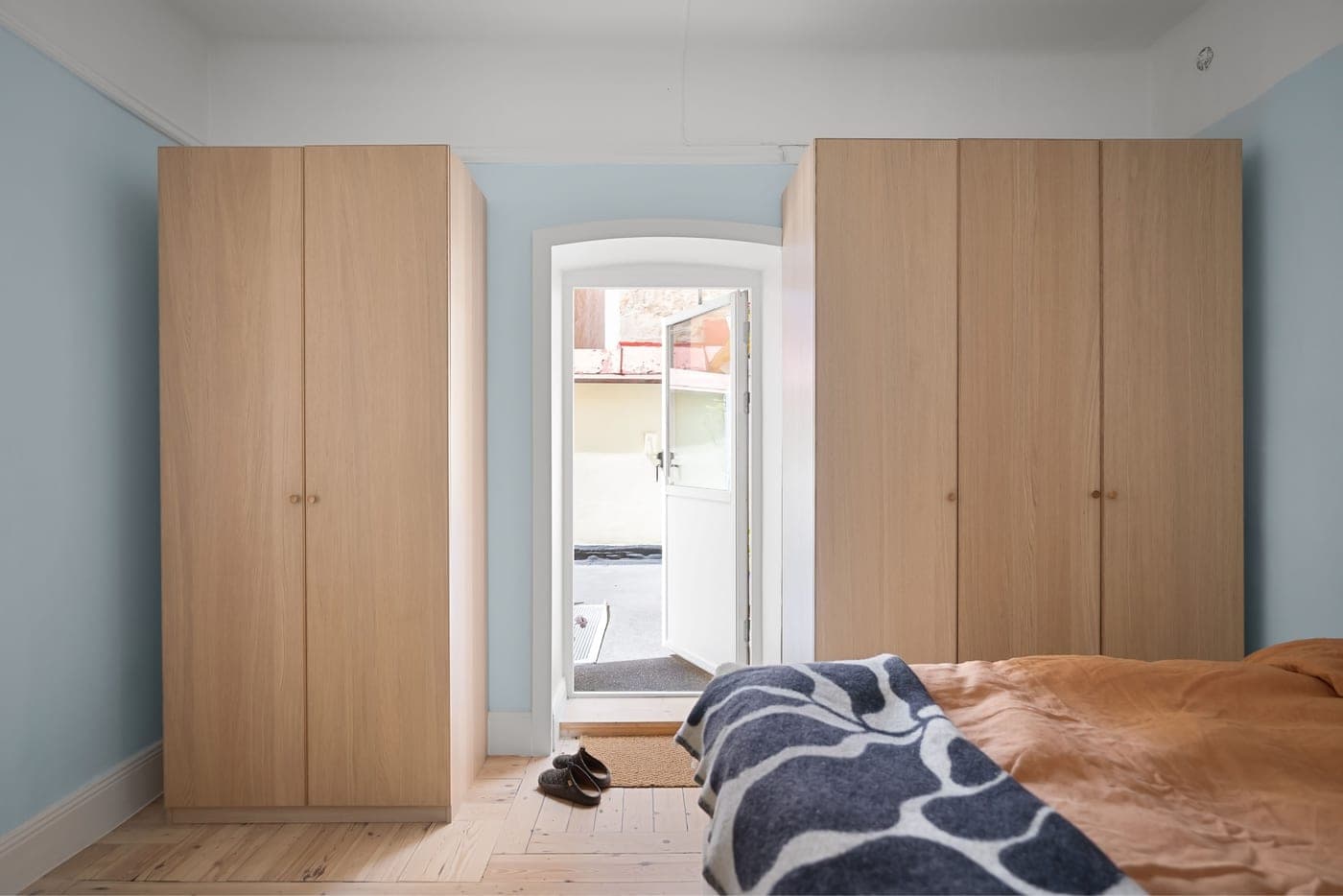
Yes — a bedroom, a closet floor, a living room or a back hallway all work, and two published figures decide which cabinet suits which room: the depth and the load the top will take. The VASAGLE ULBC035 is the pick where it has to pass as furniture, at 9.4 in (24 cm) deep, 32.6 in (83 cm) high and a published 121 lb top. The rooms to avoid are an unheated garage and anywhere outdoors.
Strip the marketing off a shoe cabinet and it is a shallow cabinet with adjustable shelves and either flip-down drawers or doors. Nothing about that is specific to an entryway. What IS specific is the depth: this category is built to about 9 to 15 inches because that is what a hallway can spare, and that shallowness is exactly why it solves problems in rooms where a normal cabinet is too deep to stand anywhere.
The two figures to check before moving one anywhere are the depth and the published load. Depth decides whether the room still works around it. The load decides whether it can hold anything other than shoes — and in this category that figure ranges from 15 lb to 121 lb on the top, which is the difference between a tray of keys and a table lamp.
In a bedroom
This is the most common move and it works, with two caveats. The first is airflow. A closed cabinet of shoes in a bedroom concentrates exactly what you do not want concentrated there: open designs promote the airflow that keeps moisture and odor down, and closed cabinets trap the moisture that bacteria need. In a hallway you can live with that. Three feet from a pillow, buy louvered doors or leave the fronts open.
The second is height and what goes on top. A 47.7 in (121 cm) slim tower publishes a 22 lb top, and a 40 in (102 cm) narrow cabinet publishes 15 lb — neither is a nightstand, whatever its height suggests. The low, wide cabinet at 32.6 in with a published 121 lb top is the one that takes a lamp, a stack of books and a drink without any arithmetic.
A bedroom also removes the one constraint that dominates the entryway: nobody is walking past it with a bag. If the wall is free, the 15 in (38 cm) deep louvered cabinet becomes the obvious choice — it takes an adult shoe flat, heel to toe, rather than standing it on edge, and the louvers deal with the airflow problem in the room where it matters most.
On a closet floor
A standard reach-in closet is about 24 inches deep, which is the figure the whole plan turns on. A 9.4 in (24 cm) cabinet on the closet floor leaves roughly 14 inches in front of it, so hanging shirts and jackets clear the top comfortably; a 15 in cabinet leaves about 9 inches and long coats will rest on it.
What catches people out is not the depth but the door. A flip-drawer front tilts outward as it opens and needs that arc clear — inside a closet, with clothes hanging in front of it, the drawer can foul the hems. Three answers, in order of cost: measure the arc and leave it clear, buy a cabinet with hinged doors rather than flip drawers, or pick the bamboo tower whose doors slide up into the body and need no clearance at all.
There is also a case for no doors at all in a closet. The closet door is already hiding everything, so an open-tier rack dries shoes better and costs less. If you want the cabinet for dust rather than for tidiness, that argument flips — a closet is one of the dustiest places in a house.
As a console, sideboard or hallway surface
The console-height cabinets are the most underrated thing in this category. At 32.6 and 40 inches they land at the height a hall table sits, they are 9.4 inches deep rather than the 14 to 18 a sideboard needs, and they hide between fourteen and twenty-eight pairs behind a flat front. In a living room whose door is also the front door, that is one piece doing the job of two.
Read the top ratings before you commit, because they decide the whole idea. 121 lb takes a lamp, a bowl, a stack of post and somebody leaning on it. 15 lb does not — that is a tray of keys, and the maker says so. The four cabinets on this page publish 121 lb, 22 lb, 15 lb and nothing at all, which is a spread wide enough that the word "console" tells you nothing on its own.
We do not rank console tables, so this is not us talking you out of one. If you want the full comparison, the bench-against-console page sets out what each shape actually gives you.
The picks in full
Every pick, with the numbers behind it
Top pick
A low console under a mirrorVASAGLE Shoe Cabinet with 4 Flip Doors (ULBC035)
Low, wide and 9.4 in deep with a 121 lb top — the only slim cabinet here strong enough to be furniture as well as storage.
Key dimensions
- Width
- 41.5 in (105 cm)
- Depth
- 9.4 in (24 cm)
- Height
- 32.6 in (83 cm)
- Depth band
- Ultra-slim
Footprint 41.5 x 9.4 x 32.6 in (105 x 24 x 83 cm). Tilted or on-edge storage only.
Full specification
Source: Published 9.4 D x 41.5 W x 32.6 H in, 16-28 pairs, 121 lb top / 13 lb per flip drawer, VASAGLE ULBC035B01 listing.
What the specs support
- 121 lb top rating is five times the slim cabinet — a genuine console surface
- 32.6 in (83 cm) high leaves wall clear for a mirror or hooks above
- 9.4 in (24 cm) deep despite 28 pairs of stated capacity
- Low and wide is far more stable than tall and narrow
Limitations
- 41.5 in (105 cm) needs a long wall
- Shoes sit on edge at this depth, which is hard on soft leather
- 13 lb per flip door
Skip this if
Wall length is your constraint rather than depth. There are 23 in wide cabinets here that hold nearly as many pairs.
Who it is forA hallway with a long uninterrupted wall, where the cabinet doubles as the console table under the mirror.
Pick 2
The narrowest footprintVASAGLE Slim Shoe Storage Cabinet, 3 Flip Drawers
Twenty-three inches of wall and nine and a half of depth for up to twenty pairs — the smallest floor footprint on this site.
Key dimensions
- Width
- 23.6 in (60 cm)
- Depth
- 9.5 in (24 cm)
- Height
- 47.7 in (121 cm)
- Depth band
- Ultra-slim
Footprint 23.6 x 9.5 x 47.7 in (60 x 24 x 121 cm). Tilted or on-edge storage only.
Full specification
Source: Published 9.5 D x 23.6 W x 47.7 H in, 12-20 pairs, 22 lb top / 11 lb per flip drawer, VASAGLE slim shoe cabinet listing.
What the specs support
- 1.6 sq ft of floor for up to 20 pairs is the best ratio here
- 23.6 in (60 cm) wide fits beside a door without blocking the swing
- Adjustable dividers let one drawer take boots and another take flats
- Closed fronts keep an entry looking tidy from the next room
Limitations
- 22 lb top rating is the lowest here — a lamp and keys, nothing more
- 11 lb per drawer
- 47.7 in tall on a 9.5 in base is top-heavy and wants anchoring
Skip this if
You need a surface as much as storage. A 22 lb top will not take a heavy bowl, a plant or a stack of parcels.
Who it is forA tight apartment entry where the wall beside the door is all there is, and the shoes need to be out of sight.
Pick 3
Console height in a narrow hallVASAGLE Shoe Storage Cabinet with 2 Flip Doors
Forty inches tall, nine and a half deep, and the right height to stand a lamp on without losing the hallway.
Key dimensions
- Width
- 32.7 in (83 cm)
- Depth
- 9.4 in (24 cm)
- Height
- 40 in (102 cm)
- Depth band
- Ultra-slim
Footprint 32.7 x 9.4 x 40 in (83 x 24 x 102 cm). Tilted or on-edge storage only.
Full specification
Source: Published 9.4 D x 32.7 W x 40 H in, 14-16 pairs, 15 lb tabletop / 11 lb per interior shelf, VASAGLE 2-flip-door narrow cabinet listing.
What the specs support
- 40 in (102 cm) is a natural console height beside a front door
- 9.4 in (24 cm) deep keeps a narrow hall walkable
- 14-16 pairs behind two closed fronts
- Two doors rather than three means fewer moving parts to fail
Limitations
- 15 lb tabletop is the second-lowest here — keys and a small tray only
- 11 lb per interior shelf
- Fewer pairs than the three- and four-drawer cabinets at a similar width
Skip this if
You want to put anything substantial on top. Fifteen pounds is a bowl of keys, not a lamp and a stack of post.
Who it is forA narrow hall that needs a waist-height surface more than it needs maximum pair count.
Pick 4
Ventilated closed storageYaheetech 4-Tier Shoe Cabinet with Louvered Doors
Louvered doors on a 15 in deep carcass — closed storage that still lets air at the shoes, which most closed cabinets do not.
Key dimensions
- Width
- 31 in (79 cm)
- Depth
- 15 in (38 cm)
- Height
- 34 in (86 cm)
- Depth band
- Deep
Footprint 31 x 15 x 34 in (79 x 38 x 86 cm). Boots, and a comfortable seat depth.
Full specification
Source: Published 31 W x 15 D x 34 H in, Yaheetech 4-tier louvered shoe cabinet listing.
What the specs support
- Louvered doors are the one closed design that addresses the moisture problem
- 15 in (38 cm) of depth takes any adult shoe flat, heel to toe
- 34 in (86 cm) high is a usable surface without dominating the wall
- Adjustable shelves for boots
Limitations
- 15 in deep is the deepest cabinet here and takes real hallway
- No published load rating at all
- Louvers collect dust in a way flat doors do not
Skip this if
Your hall is under 40 in wide. Fifteen inches of cabinet in a 36 in hall leaves 21 in of walkway, which is uncomfortable.
Who it is forA wider entry or a mudroom where shoes go away damp and need to dry behind a door rather than in the open.
What else can you store in one?
This is the question behind most searches for other uses, and the published per-shelf load answers it completely. Flip drawers in this category are rated at 11 to 13 lb each. Shelf cabinets run 22 to 44 lb per shelf. Those are the numbers, and they are usually the only load figures a maker gives.
One mechanical point about clothes specifically: a flip drawer is a pivoting tray, so whatever is inside rotates forward every time it opens. Folded shirts emerge creased and slumped against the front. Hinged doors over fixed shelves are the better buy if clothes rather than shoes are the plan — and those are the cabinets where the published per-shelf figures are 22 lb and up.
The rooms to keep one out of
- An unheated garage, unless the carcass is bamboo or solid wood. Most of this category is laminated particleboard or MDF, which swells irreversibly in high humidity — our garage page filters on exactly that.
- A porch, a balcony or anywhere with weather. Nothing in this category is rated for it, and our outdoor page is blunt about why.
- A bathroom. Steam is the same irreversible swelling problem as a garage, and no maker here publishes a moisture rating. A louvered cabinet in a well-ventilated bathroom with a window is the only version of this we would not argue with.
- Directly against a radiator, anywhere. Heat on one face and room air on the other is the condition panel makers warn about, because the panel moves unevenly.
Which one, by the room
- A bedroom or living room where it has to look like furniture: the VASAGLE ULBC035, 41.5 in wide, 9.4 in deep, 32.6 in high, published 121 lb top, a stated 16-28 pairs.
- A closet floor or a tight alcove: the VASAGLE slim 3-flip at 23.6 in wide and 9.5 in deep, up to 20 pairs on 1.6 sq ft of floor. Measure the drawer arc.
- A back hallway that needs a waist-height surface: the VASAGLE 2-flip-door at 32.7 in wide and 40 in high. Its top is rated 15 lb, so keys and a tray only.
- A bedroom where the shoes come in damp: the Yaheetech louvered at 15 in deep, which takes a shoe flat and lets air at it. Yaheetech publishes no load rating at all.
- A garage: none of these. Go to the garage page, where the filter is a bamboo or solid-wood carcass.
Frequently asked
Questions people actually ask
Can you put a shoe cabinet in a bedroom?
Yes, and the depth is what makes it work — 9 to 15 inches stands where a normal cabinet cannot. Prefer louvered doors or open tiers, because a sealed cabinet of shoes concentrates the moisture and odor in the room you sleep in, and check the published top load before treating it as a nightstand.
Can you use a shoe cabinet for clothes?
For folded knitwear, T-shirts, hats and gloves, yes — they are well under any published shelf rating, and adjustable dividers let you set the height. Avoid flip-drawer models for clothes: the drawer is a pivoting tray, so everything inside tips forward each time it opens. Books, files and tools exceed the 11 to 13 lb per drawer that makers publish.
Will a shoe cabinet fit on a closet floor?
A standard reach-in closet is about 24 inches deep, so a 9.4 in cabinet leaves around 14 inches in front for hanging clothes to clear and a 15 in cabinet leaves about 9. The catch is the door: flip drawers tilt outward and can foul the hems, so measure the arc or choose hinged or sliding doors.
How much weight can you put on top of a shoe cabinet?
Whatever the maker publishes, and the range is wide: 121 lb on one of the cabinets we rank, 22 lb on another, 15 lb on a third, and nothing published on a fourth. Only the 121 lb figure makes a cabinet a genuine console surface for a lamp and books.
Can a shoe cabinet be used as a console table?
The console-height models can, and they give you 14 to 28 pairs of hidden storage in 9.4 inches of depth, which is shallower than a sideboard. Check the published top rating first — on the cabinets we rank it varies by a factor of eight.
Can I put a shoe cabinet in a garage or a bathroom?
Only with a bamboo or solid-wood carcass. Particleboard and MDF swell when exposed to high humidity and do not recover, which rules out most of the category in an unheated garage or a steamy bathroom. Our garage page filters on published carcass material for that reason.
Is an open rack or a closed cabinet better away from the entryway?
Closed where dust is the problem, such as a spare room or a closet you rarely open. Open or louvered where air is the problem, which is any room people sit or sleep in. The trade is the same one it is in a hallway, with the balance shifted toward airflow.
Sources
Where these figures came from
- Standard closet dimensions — Gives a standard reach-in closet as typically about 24 inches deep, which is the figure the closet-floor section works from.
- Open against closed shoe storage — Open designs promote airflow which reduces moisture and odor buildup; closed cabinets trap moisture, creating the conditions bacteria need.
- Composite Panel Association, Dimensional Stability of Particleboard and MDF (Technical Bulletin) — States that particleboard and MDF swell when exposed to high humidity or water and that the swelling is not reversible on re-drying, which is the basis for the garage and bathroom exclusions.
- Manufacturer published specifications — All four cabinets: published external dimensions, stated pair counts, top load and per-drawer or per-shelf load, cited under each pick.
Read next
Where to go from here
Where to put a shoe cabinet
The five placement checks inside the entry, starting with the door swing.
Shoe storage for a garage
The one room with a different material rule, and the five units that survive it.
Entryway bench or console table?
What a surface buys you against what a seat buys you.
Narrow shoe cabinets
Everything at 10 inches deep or less, which is the depth that makes other rooms possible.
Does a shoe cabinet need ventilation?
Why the airflow question gets stricter the further the cabinet is from the front door.
Outdoor and porch shoe storage
The rooms that are not rooms, and what actually works there.