Head to head
Entryway bench or console table?
One gives you somewhere to sit and shoes underneath; the other gives you a waist-height surface and nothing under it. In a hallway the decision is made by depth, not by taste.
#ad — We earn a commission from qualifying purchases made through the Amazon links on this page, at no extra cost to you. It does not change what we recommend or the order we rank it in. Full disclosure.
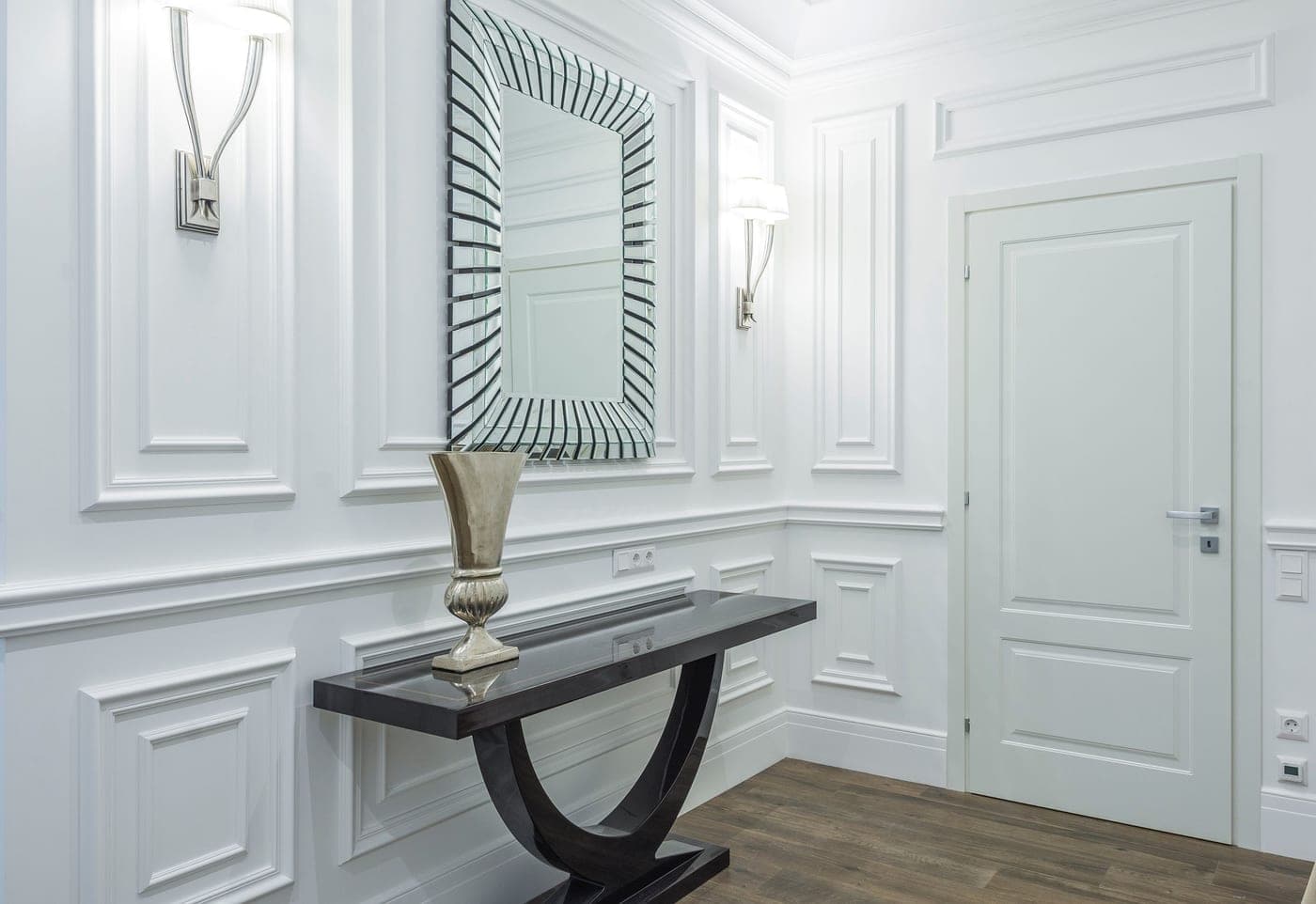
Which should you choose?
The bench, if anyone in the house sits down to put shoes on — it is the only one of the two that stores shoes, and our top-ranked bench holds a stated 8-10 pairs on 11.8 in (30 cm) of depth. Choose a console table only where nobody stops: a walk-through entry that needs a surface for keys and post. If you want the surface AND the shoes hidden, buy neither: a console-height shoe cabinet like the VASAGLE ULBC035 is 32.6 in (83 cm) high, 9.4 in (24 cm) deep and holds a stated 16-28 pairs, which is shallower than any console table.
We do not rank console tables, and this page is not an argument that you should never buy one. It exists because the two pieces are sold as interchangeable ways to furnish an entry and they are not: one is a seat with storage, the other is a surface on legs, and a hallway can usually only afford one of them.
Published console table guidance puts them at 28 to 32 in (71 to 81 cm) tall and, for a narrow hall or entryway, 12 to 18 in (30 to 46 cm) deep, in lengths from 30 to 72 in. The entryway benches we rank are 17.3 to 24 in (44 to 61 cm) high at the seat and 9.5 to 18 in deep, and most of them cluster at 17.5 to 19 in. So the shapes barely overlap, and the choice between them is really three separate decisions.
The three decisions, side by side
Read the last row first, because in most entries it settles the argument. A console table at the shallow end of its own published range takes about as much hallway as a bench does, and gives you no seat and no closed shoe storage in exchange. The 9.4-inch shoe cabinet takes less floor than either and does both jobs at once.
Where the bench genuinely wins
Anyone who sits down to deal with footwear: children with laces, anyone with boots, anyone whose knees make the alternative unpleasant, and anyone managing a dog's lead at the same time as their own shoes. A console table cannot be sat on. That is not a quibble — it is the entire function the bench exists for, and no amount of styling substitutes for it.
Shoe capacity per inch of floor is the other win. The benches we rank publish between four and eighteen pairs, from a seat that is also the storage. Under a console table, shoes sit on the floor or on an open shelf, visible from whatever room the front door opens into — which for a lot of apartments is the living room.
And benches publish load ratings. Our shortlist runs from 198 to 440 lb published static load; console tables almost never publish one at all, which is fine for a lamp and relevant the moment somebody perches on it.
Where the console table is the right answer
A walk-through entry where nobody stops. If the front door opens into a corridor that people pass through on the way to somewhere else, there is nothing for a seat to do, and the useful object is a surface at waist height: keys, post, a lamp, a bowl, somewhere to put a bag down for ten seconds.
It also wins on sight lines. A console table is open underneath, so the floor runs on and the hallway reads longer — the same trick as legs on a sofa. A 41.5-inch cabinet is a solid block. If the entry is the first thing visitors see and the shoes live in a closet anyway, that visual difference is a real reason to choose one.
What a console does not fix is shoes. If there are shoes by the door now, there will be shoes by the door after it arrives, and they will be in front of it.
The picks in full
Every pick, with the numbers behind it
Top pick
Most entrywaysVASAGLE Shoe Bench with Cushion, 15 Compartments (ULHS15)
The one bench here that gives you a real seat, a 440 lb rating and fifteen adjustable compartments without going deeper than a foot.
Key dimensions
- Width
- 41.3 in (105 cm)
- Depth
- 11.8 in (30 cm)
- Height
- 18.9 in (48 cm)
- Seat height
- 18.9 in (48 cm)
- Depth band
- Slim
Footprint 41.3 x 11.8 x 18.9 in (105 x 30 x 48 cm). Most shoes flat, larger sizes at an angle.
Full specification
Source: Published dimensions and 440 lb load rating, VASAGLE ULHS15WT / ULHS15BR listing.
What the specs support
- 440 lb rating is the highest of any bench here, and it is published rather than implied
- 11.8 in (30 cm) deep, so it clears a 36 in hallway with the door swing intact
- Adjustable shelves mean boots and sneakers can share the same carcass
- The cushion cover unzips, which matters on the one surface in the house that meets wet shoes
Limitations
- 41.3 in (105 cm) is a lot of wall for a small entry
- Compartment internal depth is not published, so tall boots are a gamble
- 12 mm particleboard is the category norm, not an upgrade
Skip this if
You have less than 44 in (112 cm) of clear wall. At 41.3 in wide this bench needs the whole run, and there is a narrower option below that gives up only a few pairs.
Who it is forA family entry with a full wall to give it, where the bench has to take an adult sitting down to pull boots off every day.
Pick 2
A low console under a mirrorVASAGLE Shoe Cabinet with 4 Flip Doors (ULBC035)
Low, wide and 9.4 in deep with a 121 lb top — the only slim cabinet here strong enough to be furniture as well as storage.
Key dimensions
- Width
- 41.5 in (105 cm)
- Depth
- 9.4 in (24 cm)
- Height
- 32.6 in (83 cm)
- Depth band
- Ultra-slim
Footprint 41.5 x 9.4 x 32.6 in (105 x 24 x 83 cm). Tilted or on-edge storage only.
Full specification
Source: Published 9.4 D x 41.5 W x 32.6 H in, 16-28 pairs, 121 lb top / 13 lb per flip drawer, VASAGLE ULBC035B01 listing.
What the specs support
- 121 lb top rating is five times the slim cabinet — a genuine console surface
- 32.6 in (83 cm) high leaves wall clear for a mirror or hooks above
- 9.4 in (24 cm) deep despite 28 pairs of stated capacity
- Low and wide is far more stable than tall and narrow
Limitations
- 41.5 in (105 cm) needs a long wall
- Shoes sit on edge at this depth, which is hard on soft leather
- 13 lb per flip door
Skip this if
Wall length is your constraint rather than depth. There are 23 in wide cabinets here that hold nearly as many pairs.
Who it is forA hallway with a long uninterrupted wall, where the cabinet doubles as the console table under the mirror.
Pick 3
Console height in a narrow hallVASAGLE Shoe Storage Cabinet with 2 Flip Doors
Forty inches tall, nine and a half deep, and the right height to stand a lamp on without losing the hallway.
Key dimensions
- Width
- 32.7 in (83 cm)
- Depth
- 9.4 in (24 cm)
- Height
- 40 in (102 cm)
- Depth band
- Ultra-slim
Footprint 32.7 x 9.4 x 40 in (83 x 24 x 102 cm). Tilted or on-edge storage only.
Full specification
Source: Published 9.4 D x 32.7 W x 40 H in, 14-16 pairs, 15 lb tabletop / 11 lb per interior shelf, VASAGLE 2-flip-door narrow cabinet listing.
What the specs support
- 40 in (102 cm) is a natural console height beside a front door
- 9.4 in (24 cm) deep keeps a narrow hall walkable
- 14-16 pairs behind two closed fronts
- Two doors rather than three means fewer moving parts to fail
Limitations
- 15 lb tabletop is the second-lowest here — keys and a small tray only
- 11 lb per interior shelf
- Fewer pairs than the three- and four-drawer cabinets at a similar width
Skip this if
You want to put anything substantial on top. Fifteen pounds is a bowl of keys, not a lamp and a stack of post.
Who it is forA narrow hall that needs a waist-height surface more than it needs maximum pair count.
Pick 4
Entries you can see from the living roomNathan James Beacon Storage Bench
Seagrass and solid rubberwood on an 18 in seat, with the one published internal compartment height in this roundup.
Key dimensions
- Width
- 42 in (107 cm)
- Depth
- 18 in (46 cm)
- Height
- 18 in (46 cm)
- Seat height
- 18 in (46 cm)
- Depth band
- Deep
Footprint 42 x 18 x 18 in (107 x 46 x 46 cm). Boots, and a comfortable seat depth.
Full specification
Source: Published 42 W x 18 D x 18 H in with a 42 x 18 x 10 in storage compartment and 18 in seat height, Nathan James Beacon listing.
What the specs support
- The only bench here that publishes its internal compartment height (10 in)
- 18 in seat height is exactly the residential standard
- Solid rubberwood legs rather than a laminated leg panel
- Reads as furniture, not as storage, in a room you can see from
Limitations
- 18 in (46 cm) deep is half again as deep as the steel benches here
- No published weight capacity, which on a bench is the figure you want
- Seagrass is a poor surface for wet boots
Skip this if
Your hallway is at the 36 in code minimum. At 18 in deep this bench takes half the width, which is uncomfortable to walk past every day.
Who it is forAn open entry or a wide foyer where the bench is on show and the storage is for bags rather than muddy boots.
The third answer: a shoe cabinet at console height
This is the part most people searching for a console table have not come across. Two of the cabinets we rank are built at console height and are shallower than any console table: 32.6 in high by 9.4 in deep with a stated 16-28 pairs behind four flip fronts, and 40 in high by 9.4 in deep with a stated 14-16 pairs behind two.
Depth is where this gets decisive. Published guidance puts a hallway console at 12 to 18 inches deep. At 9.4 inches, these cabinets give back three to nine inches of walkway — in a 36-inch hall that is 26.6 inches left rather than 18 to 24 — and they do it while hiding the shoes a console leaves on the floor.
The catch is the top, and it is a real one. Published top ratings on the two are 121 lb and 15 lb. The first is a genuine console surface: a lamp, a bowl, a stack of post, somebody leaning on it. The second is a tray of keys and nothing heavier, and the maker says so. If you want to put something substantial on top, that figure decides which one you buy — and a cabinet with no published top rating at all should be treated as the lower number.
There is one honest aesthetic loss. A low cabinet at 32.6 inches with a mirror above it reads as a console; a 40-inch cabinet reads as a cabinet. If the look of an open-legged table is what you are buying, nothing in this category will give it to you.
If you want the bench to look like furniture
The usual reason people reach for a console is that most entryway benches look like what they are: a laminated box with shoes in it. There is one exception on this site. The Nathan James Beacon is 42 in wide with a natural seagrass seat on solid wire-brushed rubberwood legs, and it publishes the internal dimensions of its storage compartment — 42 by 18 by 10 in — which almost nothing else in this category does. Its 18 in seat height is exactly the residential standard, and it reads as furniture rather than as storage.
Two honest caveats. It is 18 in (46 cm) deep, which is the deepest thing we rank and leaves 18 inches of walkway in a 36-inch hall. And Nathan James publishes no weight capacity at all, which on one of the dearest benches we rank is a genuine omission rather than a detail. Seagrass is also a poor surface for wet boots, which the maker does not say and we will.
Which one, by the entry you have
- Anyone sits down to put shoes on: the bench. The VASAGLE 15-compartment at 41.3 in wide, 11.8 in deep, 440 lb published and a stated 8-10 pairs.
- You want a surface and the shoes gone: the VASAGLE ULBC035 console-height cabinet. 9.4 in deep, 32.6 in high, a published 121 lb top, a stated 16-28 pairs.
- A narrow hall that needs a drop zone more than a seat: the VASAGLE 2-flip-door at 40 in high and 9.4 in deep. Keys and a tray on top only — 15 lb published.
- The entry is visible from the living room: the Nathan James Beacon, seagrass and rubberwood with its internal compartment published. It is also the deepest bench we rank, at 18 in, and it publishes no load rating.
- A walk-through corridor nobody stops in, with the shoes already housed elsewhere: a console table is the honest answer, and we do not rank them. Keep it at 12 in deep or less in a 36-inch hall.
Frequently asked
Questions people actually ask
Should I get an entryway bench or a console table?
A bench if anyone sits down to put shoes on, because it is the only one of the two that stores shoes and takes a seated adult. A console table if the entry is a walk-through that needs a surface for keys and post. If you want both, a console-height shoe cabinet at 9.4 in deep is shallower than either and hides a stated 16-28 pairs.
How deep is a console table compared with an entryway bench?
Published guidance puts a hallway console table at 12 to 18 inches deep. The benches we rank run 9.5 to 18 inches, and the console-height shoe cabinets are 9.4 inches. In a 36-inch hallway that difference is the gap between 18 and 26.6 inches of walkway.
Can a shoe cabinet be used as a console table?
Yes, and two of the cabinets we rank are built at console height. Check the published top load first: one takes 121 lb, which is a lamp and books, and the other takes 15 lb, which is a tray of keys. A cabinet that publishes no top rating should be treated as the lower figure.
How tall is a console table?
Published guidance gives 28 to 32 inches, with around 30 inches the most common, and entryway consoles often at the taller end. For comparison, the bench seats we rank sit at 17.3 to 20.9 inches and the console-height cabinets at 32.6 and 40 inches.
Do you need a seat in an entryway?
If anyone puts on boots, laces or a child's shoes there, yes — that is the one job no console table or shoe cabinet can do. If the entry is a corridor people walk through to somewhere else, a seat is floor depth spent on nothing.
Can I have a bench and a console table in the same entryway?
Only with the wall for both, and in a 36-inch hallway you usually do not: each piece costs 10 to 18 inches of depth where it stands, and the walkway is the budget. Our first-setup guide sets out the order to buy in when the answer is one piece now and another later.
What goes under a console table in an entryway?
Baskets or a shoe rack, which puts the shoes back on show — the thing most people were trying to fix. That is the argument for a console-height cabinet instead: the same surface, with the shoes behind a flat front rather than under an open table.
Sources
Where these figures came from
- Console table dimensions guidance — Published category figures: console tables 28 to 32 in tall with around 30 in most common, narrow depths of 12 to 17 in, lengths of 30 to 72 in, and a 12 to 18 in depth recommendation for a hall or entryway.
- International Residential Code minimum hallway width — 36 in minimum for a residential hallway; 36 to 42 in typical, 42 to 48 in comfortable.
- Standard bench seat height — 18 to 19 in from floor to seat top is the residential standard; 18 in (46 cm) for an entryway bench specifically.
- Manufacturer published specifications — Every bench and cabinet figure on this page is the maker's own published dimension, pair count or load rating, cited under each pick.
Read next
Where to go from here
Bench, ottoman or stool?
The same question among three things you can actually sit on.
Using a shoe cabinet in another room
Where else a console-height cabinet earns its depth.
Narrow shoe cabinets
Everything at 10 inches deep or less, which is where this comparison is won.
Entryway bench dimensions
Standard seat heights, depths and widths, with the models that land inside them.
Your first entryway storage setup
What to buy first when the hallway will only take one piece.
Large and wide entryway benches
The benches long enough to furnish a wall the way a console does.