Guide
Your first entryway storage setup
Almost nobody buys an entryway all at once, and the order you buy in decides whether the second purchase fits beside the first. Here is the sequence, and the piece that earns its floor at each step.
#ad — We earn a commission from qualifying purchases made through the Amazon links on this page, at no extra cost to you. It does not change what we recommend or the order we rank it in. Full disclosure.
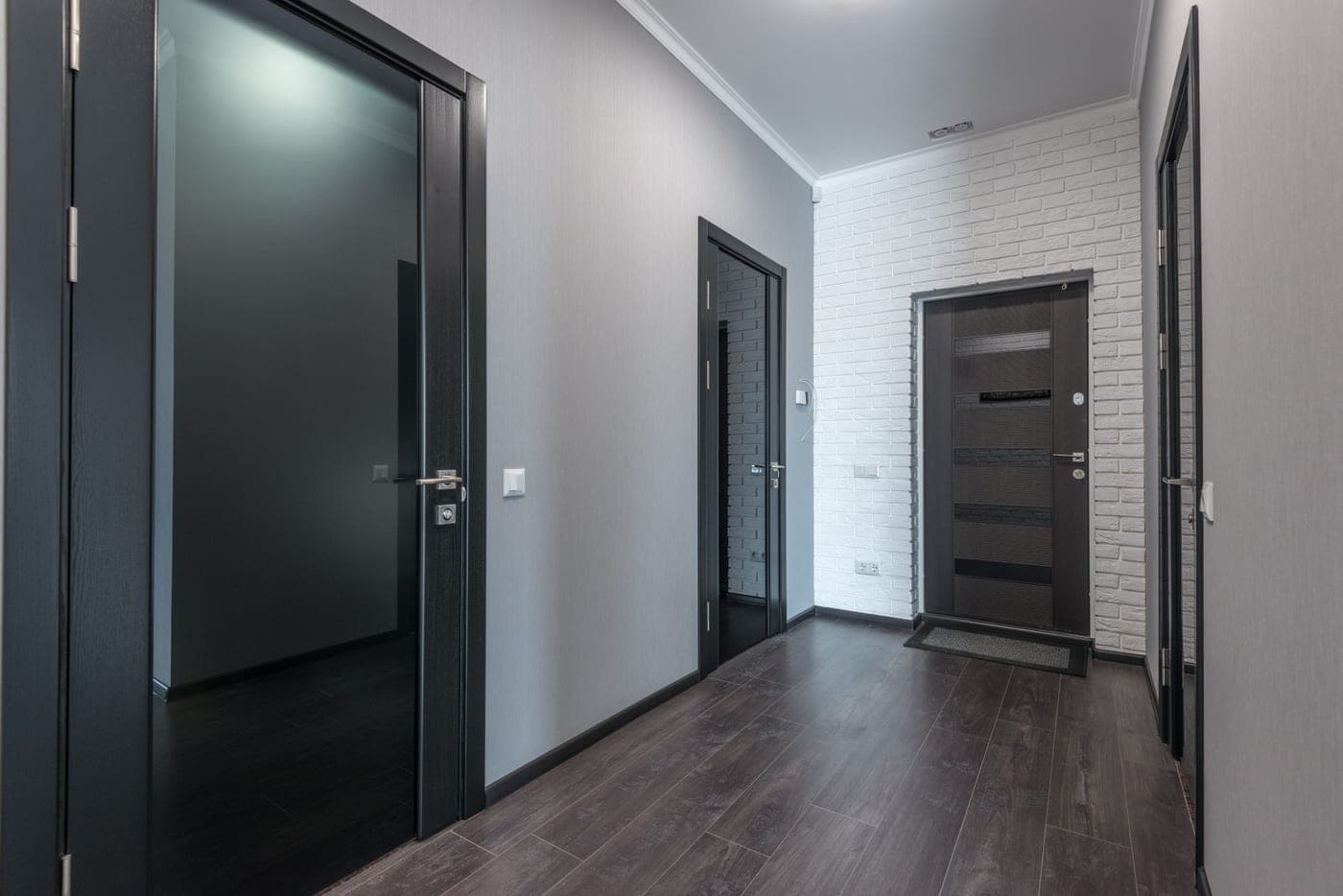
What should you buy first for an entryway?
A bench with storage underneath, in almost every case. It is the only shape that solves two problems at once — somewhere to sit and somewhere for shoes — and it is the piece that determines what will still fit beside it later. Buy the bench, live with it for a month, then decide what is still missing.
This page exists because entryways are bought in pieces and planned in none. The usual sequence is a rack that turns out to be too shallow, then a hook rail at the wrong height, then a bench that no longer fits the wall the first two are on. Three purchases, two regrets, and a hallway that still does not work.
The alternative is not to plan the whole room. It is to buy in an order where each piece leaves room for the next one, and to know in advance which decisions are reversible and which are not. That is a short list, and it is what follows.
Take four measurements before you buy anything
This takes ninety seconds and it eliminates most of the market before style is ever a factor. Our measuring guide covers the method in full; the short version is four numbers.
- The clear wall run, measured at about twenty inches off the floor — not at eye level, because skirting boards, radiator pipes and door casings all live in that lower band and none of them are visible when you eyeball a room standing up.
- The hallway width at its narrowest point. Subtract the depth of anything you are considering; if less than 24 inches is left, two people can no longer pass.
- The door swing. A front door sweeps a quarter circle with a radius equal to its own width, typically 32 to 36 inches. Tape it on the floor — in a flat it frequently lands on the only free wall.
- The height to the nearest obstruction at the exact spot the piece will stand: a stair soffit, a boxed pipe run, a sloped ceiling.
Write those four numbers down. Every recommendation on this site, including the ones below, is answerable from them, and the last one is the one people forget until a 59-inch cabinet will not stand upright where they planned it.
Stage one: the bench, and why it goes first
A bench with open storage under it is the highest-value single purchase in this category, and the reason is not the storage. It is that putting shoes on standing up in a doorway is the specific thing an entryway most often fails at, and no other shape fixes it.
It is also the piece with the most binding constraint. A bench needs 19.7 to 48 inches of uninterrupted wall at seat height, which is a harder thing to find in a hallway than the vertical space a cabinet or a rail needs. Buy it first and you buy it into the best available wall; buy it third and you buy it into whatever is left, which is usually nothing.
What to look for at this stage, in order: a depth of 12 inches or less if the hall is at the 36-inch code minimum, a published static load rating, a seat height between 17 and 19 inches, and open tiers rather than a lid. Open matters more than it sounds — shoes arrive wet, and a closed box with no ventilation traps that moisture against them, which is what produces the smell people blame on the cabinet.
What not to optimize for yet: pair count. A first bench holding six to eight pairs is enough to learn from, and the households that need twenty pairs of capacity almost always need it in a second piece anyway.
Stage two: hooks, and the cheapest decision on this page
Coats are the second problem and they are solved two ways, at wildly different prices and commitments.
A wall rail above the bench you already own takes zero floor depth, costs two fixings, and lets you choose the hook height — including two heights, one for adults at 60 to 65 inches and one for children at 36 to 42. That is the whole solution, and it is reversible in ten minutes with a tube of filler.
A hall tree replaces the bench with a single unit that does coats, seat and shoes together. It is tidier and it is a much larger commitment: 11.8 to 13.8 inches of permanent floor depth, five screws into the wall, and hook heights fixed by the frame. If you already bought a bench in stage one, a hall tree means replacing it rather than adding to it — which is exactly the double purchase this page is written to avoid.
So the honest sequencing advice: if you are confident you want the integrated look, buy the hall tree at stage one instead of the bench. If you are not sure, buy the bench and add a rail. The rail costs a fraction of the difference and nothing about it forecloses a hall tree later.
Stage three: pair count, only if you still need it
Wait a month before this one. Households consistently misjudge how many pairs actually live by the door, in both directions, and a bench plus a rail solves more entryways than people expect.
If shoes are still on the floor after a month, the fix is a slim closed cabinet on a different wall — not a bigger bench. A cabinet 9.4 inches deep holds 12 to 16 pairs and leaves 26 inches of walkway in a code-minimum corridor, which is a better trade than any wider bench offers. Our capacity guide covers the arithmetic on how many pairs you actually have.
The one thing to check before buying closed storage: the largest shoe in the house. A flip-drawer cabinet at 9.4 inches external has roughly 8.5 inches of internal depth and stores shoes on edge. That is fine to a US men's 11 and progressively worse above it, and if anyone wears a 12 or 13 the whole slim class is the wrong answer.
The picks in full
Every pick, with the numbers behind it
Top pick
Most entrywaysVASAGLE Shoe Bench with Cushion, 15 Compartments (ULHS15)
The one bench here that gives you a real seat, a 440 lb rating and fifteen adjustable compartments without going deeper than a foot.
Key dimensions
- Width
- 41.3 in (105 cm)
- Depth
- 11.8 in (30 cm)
- Height
- 18.9 in (48 cm)
- Seat height
- 18.9 in (48 cm)
- Depth band
- Slim
Footprint 41.3 x 11.8 x 18.9 in (105 x 30 x 48 cm). Most shoes flat, larger sizes at an angle.
Full specification
Source: Published dimensions and 440 lb load rating, VASAGLE ULHS15WT / ULHS15BR listing.
What the specs support
- 440 lb rating is the highest of any bench here, and it is published rather than implied
- 11.8 in (30 cm) deep, so it clears a 36 in hallway with the door swing intact
- Adjustable shelves mean boots and sneakers can share the same carcass
- The cushion cover unzips, which matters on the one surface in the house that meets wet shoes
Limitations
- 41.3 in (105 cm) is a lot of wall for a small entry
- Compartment internal depth is not published, so tall boots are a gamble
- 12 mm particleboard is the category norm, not an upgrade
Skip this if
You have less than 44 in (112 cm) of clear wall. At 41.3 in wide this bench needs the whole run, and there is a narrower option below that gives up only a few pairs.
Who it is forA family entry with a full wall to give it, where the bench has to take an adult sitting down to pull boots off every day.
Pick 2
Halls under 40 inchesHOOBRO Narrow Shoe Cabinet with 2 Flip Drawers (WT21SC01)
Nine and a half inches deep with two flip drawers and shelves that move to three heights — the cabinet for a hall that cannot spare a foot.
Key dimensions
- Width
- 31.5 in (80 cm)
- Depth
- 9.4 in (24 cm)
- Height
- 40.5 in (103 cm)
- Depth band
- Ultra-slim
Footprint 31.5 x 9.4 x 40.5 in (80 x 24 x 103 cm). Tilted or on-edge storage only.
Full specification
Source: Published 9.4 D x 31.5 W x 40.5 H in, 12-16 pairs, 44 lb top / 22 lb per internal shelf, 42.8 lb product weight, HOOBRO WT21SC01 listing.
What the specs support
- 9.4 in (24 cm) deep leaves 26 in of walking room in a code-minimum 36 in hall
- Three shelf heights is the most adjustment of any cabinet here
- 44 lb top rating means it can hold keys, post and a lamp, not just look flat
- Open bottom shelf for the pair you are actually wearing today
Limitations
- At 9.4 in deep shoes sit tilted, so a men's 12 is at the edge of what fits
- 42.8 lb is heavy for a wall-adjacent cabinet you may want to move
- Flip drawers hold shoes on edge, which crushes soft uppers over time
Skip this if
The household wears size 12 or larger. At this depth large shoes sit at a steep angle and the drawer front fouls.
Who it is forA genuinely narrow hall, corridor or apartment entry where a 12 in cabinet would make the walkway unusable.
Pick 3
The strongest published seatVASAGLE 3-in-1 Hall Tree with Steel Frame (UHSR041)
A 300 lb steel-framed bench under a coat rack, in 27.6 in of wall — the strongest seat rating in this roundup.
Key dimensions
- Width
- 27.6 in (70 cm)
- Depth
- 12.6 in (32 cm)
- Height
- 68.9 in (175 cm)
- Depth band
- Standard
Footprint 27.6 x 12.6 x 68.9 in (70 x 32 x 175 cm). Adult shoes flat, heel to toe.
Full specification
Source: Published 12.6 D x 27.6 W x 68.9 H in and 300 lb bench capacity, VASAGLE UHSR041B41 listing.
What the specs support
- 300 lb bench rating is the highest published here
- 27.6 in (70 cm) wide is the second-narrowest hall tree on this site
- Steel frame rather than a board carcass
- 12.6 in (32 cm) deep is still under the seat-depth comfort threshold
Limitations
- No published per-hook rating, unlike its sibling above
- 68.9 in (175 cm) tall, so wall fixing is not optional
- Fewer hooks than the 10-hook models here
Skip this if
You need to know what the hooks will take. VASAGLE publishes the bench rating for this model but not the hook rating.
Who it is forA narrow entry where the seat has to take an adult every day and 28 inches is all the wall there is.
Pick 4
Damp entriesSONGMICS 3-Tier Bamboo Shoe Rack Bench (ULBS04H)
Bamboo rather than laminated board, 286 lb rated, and the only bench here offered in three widths so you can match the wall you actually have.
Key dimensions
- Width
- 27.6 in (70 cm)
- Depth
- 11.3 in (29 cm)
- Height
- 17.8 in (45 cm)
- Seat height
- 17.8 in (45 cm)
- Depth band
- Slim
Footprint 27.6 x 11.3 x 17.8 in (70 x 29 x 45 cm). Most shoes flat, larger sizes at an angle.
Full specification
Source: Published widths (50 / 70 / 90 cm), 11.3 in depth, 17.8 in height and 286 lb load, SONGMICS ULBS04H listing.
What the specs support
- Bamboo handles entryway humidity better than a particleboard carcass
- 11.3 in (29 cm) is the shallowest bench in this roundup
- Three published widths — 19.7, 27.6 and 35.4 in — so you can size to the wall
- Open tiers, so nothing traps moisture against a wet sole
Limitations
- 286 lb sits between the two steel-framed benches here
- No back or arms, so it is a perch rather than a place to sit and wait
- Bamboo marks if road salt is left on it over a winter
Skip this if
Your entry takes serious winter boots. At 11.3 in (29 cm) deep the tiers hold shoes, not knee-high boots stood upright.
Who it is forA humid or coastal entry, or anyone who wants the shallowest possible bench that is still a bench.
Pick 5
Under 29 inches of wallHOOBRO Hall Tree Entryway Bench with 9 Hooks (BG17MT01)
Twenty-eight and a half inches of bench with nine hooks above it — the smallest complete coat-and-shoe station here.
Key dimensions
- Width
- 28.7 in (73 cm)
- Depth
- 11.8 in (30 cm)
- Height
- 17.5 in (44 cm)
- Seat height
- 17.5 in (44 cm)
- Depth band
- Slim
Footprint 28.7 x 11.8 x 17.5 in (73 x 30 x 44 cm). Most shoes flat, larger sizes at an angle.
Full specification
Source: Published bench 28.7 L x 11.8 W x 17.5 H in with 9 coat hooks and storage for 6 pairs, HOOBRO BG17MT01 listing.
What the specs support
- 28.7 in (73 cm) wide covers coats, shoes and a seat in the smallest span here
- 17.5 in seat height matches the standard exactly
- Nine hooks on a 28 in span is dense coat storage
- 11.8 in deep keeps a 36 in hall usable
Limitations
- 6 pairs of published shoe capacity
- Wall panel dimensions are unpublished, so the finished height is unknown
- Nine hooks across 28 in means coats overlap in practice
Skip this if
Two or more adults use this entry in winter. Nine overlapping hooks on 28 in of wall is a coat pile, not coat storage.
Who it is forA small flat, a landing, or a back door that needs the full hall-tree function in the least possible wall.
The order in one table
The row to read twice is 2b. Choosing a hall tree is not an addition to stage one, it is a substitution for it, and that is the single most expensive sequencing mistake available in this category.
Four mistakes that cost a second purchase
- Buying depth you cannot afford. An 18-inch bench in a 36-inch hallway leaves 18 inches of walkway, which is narrower than most adults in a winter coat. Depth is the measurement you pay for every single day.
- Buying tall before buying wide. A 59-inch cabinet must be anchored, and in a rental that is a conversation. Low and wide needs no fixing at all and is the safer first vertical purchase.
- Buying for the shoe collection rather than the shoes by the door. The pairs in active rotation are perhaps a third of what a household owns, and the entryway only ever needs the third.
- Buying hooks at one height. A single rail is either right for adults or right for children and cannot be both. Two rails cost very little more and are the difference between a child hanging their own coat and a coat on the floor.
What we would buy, starting from nothing
- A standard hallway with a full wall: the 15-compartment bench, then a rail above it. It publishes the highest static load of any bench we rank and stays under a foot deep.
- A tight budget: the bamboo 3-tier bench, which is the cheapest real storage on this site and the only non-board carcass in the budget tier.
- One usable wall and a strong preference for one object: the 3-in-1 steel hall tree at 27.6 in — the narrowest full tower we rank, with the strongest published seat.
- A back door or a landing with almost no wall: the 28.7 in HOOBRO hall tree bench, the smallest complete coat-and-shoe station here.
- Stage three, when shoes are still on the floor: the 9.4 in HOOBRO flip-drawer cabinet, with the best published top and shelf ratings in the slim class.
- A hallway under 34 inches wide: none of the above as a first purchase. Start from our narrow entryway plan instead — a bench may simply be the wrong answer.
Frequently asked
Questions people actually ask
What should I buy first for an entryway?
A bench with storage underneath. It solves seating and shoes at once, and it has the most demanding wall requirement — so buying it first means it gets the best available wall rather than whatever is left.
Is a hall tree a good first purchase?
Only if you are sure you want the integrated look. A hall tree replaces a bench rather than adding to one, commits 11.8 to 13.8 inches of floor permanently and needs five screws in the wall. A bench plus a wall rail is the reversible version of the same idea.
How much entryway storage do I actually need?
Less than most people buy at first. Only the pairs in active rotation live by the door — roughly a third of what a household owns. Buy one piece, live with it for a month, and add a slim cabinet only if shoes are still on the floor.
What measurements do I need before buying?
Four: the clear wall run at about twenty inches off the floor, the hallway width at its narrowest, the door's swing arc, and the height to the nearest obstruction at the exact spot the piece will stand.
Should I buy a bench or a shoe cabinet first?
A bench, unless you cannot spare the wall. A cabinet holds far more pairs but gives you nowhere to sit, and putting boots on standing up in a doorway is the failure most entryways actually have.
How deep should my first entryway piece be?
Twelve inches or less if your hallway is at the 36-inch residential code minimum — that leaves 24 inches of walking room, the point at which two people can still pass each other.
What is the cheapest way to start?
An open-tier bamboo bench plus a two-hook rail. Open tiers are the cheapest shape to build, they dry wet shoes rather than sealing them in, and the rail costs two fixings and lets you set the hook height yourself.
Sources
Where these figures came from
- International Residential Code minimum hallway width — 36 in minimum for a residential hallway; 36 to 42 in typical, 42 to 48 in comfortable.
- Standard bench seat height — 18 to 19 in from floor to seat top is the residential standard; 18 in (46 cm) for an entryway bench specifically.
- Coat hook height reference — 60 to 65 in for adults, 66 in builder standard, 36 to 42 in for children, 54 to 60 in in an entryway or mudroom, and 24 to 30 in above a bench seat.
- US shoe size to foot length charts — Foot length in inches by US women's and men's size, plus the published conversion formulas (women's = 3L - 21, men's = 3L - 22). Used for every depth calculation on this site.
- Manufacturer published specifications — Product figures quoted here are the manufacturers' own published dimensions and ratings, cited in full on the roundup this guide links to.
Read next
Where to go from here
How to measure your entryway
The four measurements above, in full, with the mistakes that make them wrong.
Entryway storage benches
The stage-one shortlist, ranked with depth carrying the largest weight.
Is a hall tree worth it?
Before you substitute stage 2b for stage one, the honest case on both sides.
Narrow shoe cabinets
The stage-three purchase, if shoes are still on the floor after a month.
What to put in a narrow entryway
Start here instead if your hallway is under 34 inches wide.