Ranked roundup
Shoe storage for a garage
A garage is the one room in the house nobody conditions, and most of this category is laminated board that swells once and never recovers. Five units whose makers publish a carcass that survives it.
#ad — We earn a commission from qualifying purchases made through the Amazon links on this page, at no extra cost to you. It does not change what we recommend or the order we rank it in. Full disclosure.
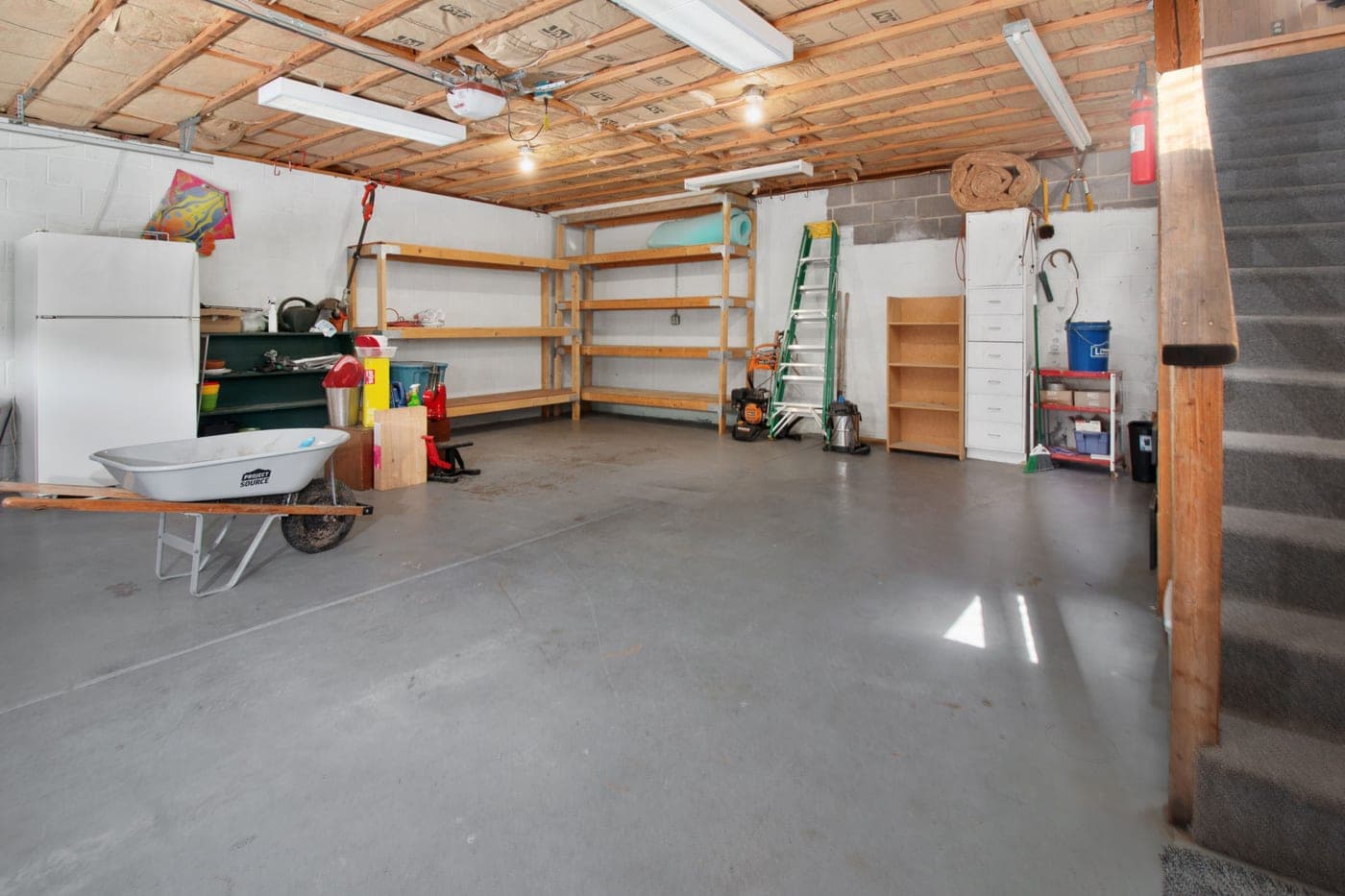
What shoe storage works in a garage?
The JAYGOVAN tall bamboo cabinet, for a bamboo carcass, a stated 26-30 pairs and sliding doors that need no swing clearance beside a car. If you want the most pairs and the best airflow, the HMBTCRY louvered bamboo cabinet holds a stated 36-40 and publishes 33 lb (15 kg) per shelf. Avoid laminated particleboard entirely: a garage is unconditioned, and that swelling does not reverse.
For a lot of households the garage door is the door everyone actually uses. Shoes come off there, boots live there, and the furniture that ends up holding them is usually whatever was replaced indoors. That is the mistake this page exists to stop, because the garage is not a slightly worse hallway. It is a different environment, and it eats one specific material.
Everything below is ranked on the same five-metric rubric as every other page on this site, with no special-case garage scoring. What changes is the filter that decides who gets ranked at all.
Why a garage destroys laminated board
Two things happen in a garage that do not happen in a hallway. The first is temperature: nobody heats or cools it, so it tracks the weather. The second is the slab. Warm, humid air leaking into a garage meets concrete that is still holding last week's cold, and that is where condensation forms — which is why garage floors sweat after a warm, rainy spell following a cold one, rather than because water is wicking up through the concrete.
Particleboard and MDF are the wrong materials to stand in that. The Composite Panel Association's own technical bulletin on dimensional stability is blunt about it: both panel types measurably swell and expand when exposed to high humidity or water, their thickness swell and linear expansion are greater than solid wood's, and — the part that matters — when they swell beyond their original dimensions from high humidity, it is not reversible. The panel does not dry back to where it started. You see it first at the cut edges and the screw holes, which on flat-pack furniture is everywhere the load is.
So the filter for this page is the carcass material, and it is a brutal one. Of the 59 products we track, twelve publish a carcass of bamboo or solid wood. Fifteen state particleboard, MDF or engineered wood outright. The other 32 do not say what they are made of at all. We cannot tell you what those are, and in a garage that is itself the answer: if a maker will not name the material, do not stand it on a concrete floor.
What got on this page
- A published carcass material of bamboo, acacia or solid wood. Not a frame material, not a finish — the boards themselves.
- Airflow, either open tiers or louvered doors. A sealed box in a damp room is how shoes start to smell, and a garage is a damp room by default.
- At least one published load figure — per shelf, per tier, or a seat rating. Four of the five clear this; the fifth is in because 82 lb of solid wood is its own argument.
- A stated capacity, or a shelf adjustment range we can check against a boot. Two of the five publish neither, and both say so in their cons.
Three things are deliberately NOT on the filter. Anti-tip hardware, because almost nobody in this category publishes it and a garage wall usually has studs you can find. Assembly time, because a garage is the one room where a two-person carry does not matter. And a top load rating, because in a garage the top of the cabinet is a shelf whether the maker rates it or not.
The five, on what the maker commits to
Read the capacity column next to the load column and the shape of this category appears. The two bamboo cabinets publish a pair count AND a per-shelf figure, which is exactly what you need to decide where the work boots go. The two hardwood benches publish a seat rating and little else, because a bench is sold as somewhere to sit. The solid-wood cabinet publishes neither and weighs 82.45 lb, which is a different kind of reassurance.
The picks in full
Every pick, with the numbers behind it
Top pick
The narrowest footprint with doorsJAYGOVAN Tall Bamboo Shoe Storage Cabinet with Sliding Doors
Doors that slide up into the top instead of swinging out, on the smallest floor footprint of any closed bamboo cabinet we could verify.
Key dimensions
- Width
- 23.6 in (60 cm)
- Depth
- 12.6 in (32 cm)
- Height
- 67.7 in (172 cm)
- Depth band
- Standard
Footprint 23.6 x 12.6 x 67.7 in (60 x 32 x 172 cm). Adult shoes flat, heel to toe.
Full specification
Source: Published footprint 23.62 x 12.60 in and 67.72 in height, stated 26-30 pairs, 44 lb (20 kg) per tier, hidden upward-sliding doors, removable middle tier, bamboo, 33.06 lb product weight, JAYGOVAN tall bamboo shoe cabinet listing. The title states 11 tiers while the description states 10.
What the specs support
- Sliding doors need no swing clearance at all, which no other closed cabinet here can say
- 23.62 x 12.6 in (60 x 32 cm) is 2.07 sq ft of floor for a stated 26-30 pairs
- 44 lb (20 kg) published per tier, which is a per-shelf figure most cabinets omit
- The middle tier lifts out for boots, and the tiers have raised front lips to stop shoes sliding off
Limitations
- The listing contradicts itself on tier count — the title says 11 tiers, its own first bullet says 10
- 67.72 in (172 cm) tall on a 12.6 in base is a top-heavy shape and no anti-tip hardware is published
- 12.6 in (32 cm) deep leaves 23.4 in of walkway in a 36-inch hall, under the 24 in two people need to pass
- Nothing published about the sliding mechanism's hardware, which is the part most likely to fail
Skip this if
You cannot anchor it. This is the tallest, narrowest cabinet on the page and the maker publishes no anti-tip kit.
Who it is forA hallway with no room for a door to swing, where the only spare space is vertical.
Pick 2
A dedicated boot compartmentSIMOE Acacia Wood Entryway Bench, 3-Tier (34 in)
The only bench here that splits its storage — one tall bay sized for boots, two shorter tiers for everything else — on FSC-certified acacia rated 350 lb.
Key dimensions
- Width
- 34 in (86 cm)
- Depth
- 11 in (28 cm)
- Height
- 17.5 in (44 cm)
- Seat height
- 17.5 in (44 cm)
- Depth band
- Slim
Footprint 34 x 11 x 17.5 in (86 x 28 x 44 cm). Most shoes flat, larger sizes at an angle.
Full specification
Source: Published 34 W x 11 D x 17.5 H in, FSC-certified acacia, 350 lb support, tall boot compartment plus a two-tier section stated to hold 4 pairs, galvanized steel screws with dual-screw connections, 11 lb product weight, SIMOE acacia entryway bench listing.
What the specs support
- 350 lb is the highest published load of any real-wood bench we rank
- A tall bay for boots rather than three tiers of identical height, which is what defeats most open benches
- FSC certification is published, which almost nothing else in this category states
- Galvanized screws and dual-screw joints are named on the listing rather than left vague
Limitations
- The tall bay takes one column, so the four-pair figure for the rest is honest but small
- 11 lb is light, and a light bench on tile travels
- No cushion, and no published seat depth beyond the 11 in carcass
- 34 in (86 cm) seats one comfortably, not two
Skip this if
Pair count is the whole problem. Four pairs plus a boot bay is a household of one or two, not a family.
Who it is forA household with winter boots that keeps ending up on the floor because every shelf is the same height.
Pick 3
Most pairs behind louvered doorsHMBTCRY 7-Tier Bamboo Shoe Cabinet with Louvered Doors
Louvered bamboo doors over a stated 36-40 pairs, with a published per-shelf load — closed storage that still lets the damp out.
Key dimensions
- Width
- 40.7 in (103 cm)
- Depth
- 13.8 in (35 cm)
- Height
- 41.1 in (104 cm)
- Depth band
- Standard
Footprint 40.7 x 13.8 x 41.1 in (103 x 35 x 104 cm). Adult shoes flat, heel to toe.
Full specification
Source: Published 40.7 W x 13.7 D x 41.1 H in, stated 36-40 pairs, 33 lb per thickened shelf, louvered double doors, open bottom section, small drawer, high-density bamboo, 40 lb product weight, HMBTCRY 7-tier bamboo shoe cabinet listing.
What the specs support
- Louvered doors are the one closed design that addresses the moisture that causes shoe odor
- A stated 36-40 pairs is the highest capacity on this page
- 33 lb per shelf is published, which lets you plan where the heavy boots go
- An open bottom section for everyday shoes, so the doors stay shut most of the time
Limitations
- 40.7 in (103 cm) wide needs most of a wall, and it does not come narrower
- No top load rating published, on a cabinet whose wide flat top will obviously be used as a surface
- 13.78 in (35 cm) deep leaves 22.2 in of walkway in a 36-inch hall
- Louvers trap dust along every slat and are tedious to clean
Skip this if
Your hall is the walkway. Forty inches of wall plus 13.78 inches of depth is a lot of corridor to give up.
Who it is forA wide entry or mudroom where shoes arrive damp and a sealed cabinet would start to smell.
Pick 4
The cheapest real hardwoodBEEFURNI Acacia Wooden Shoe Rack Bench, 3-Tier (27.6 in)
Solid acacia at a price most engineered-board benches sit at, rated 300 lb and weighing ten pounds — the entry point to real wood.
Key dimensions
- Width
- 27.6 in (70 cm)
- Depth
- 11 in (28 cm)
- Height
- 17.8 in (45 cm)
- Seat height
- 17.8 in (45 cm)
- Depth band
- Slim
Footprint 27.6 x 11 x 17.8 in (70 x 28 x 45 cm). Most shoes flat, larger sizes at an angle.
Full specification
Source: Published 27.6 W x 11 D x 17.8 H in, 100% natural acacia, 300 lb support, 10 lb product weight, 3 tiers, stated 15-minute assembly, BEEFURNI acacia shoe rack bench listing. No pair capacity is published.
What the specs support
- Solid acacia rather than laminated board, at a price that undercuts most engineered-board benches
- 300 lb published static load on a bench that weighs 10 lb itself
- 11 in (28 cm) deep, which keeps a 36-inch hallway walkable
- Open tiers, so a wet sole dries instead of sitting in its own damp
Limitations
- BEEFURNI publishes no pair count, so how much it holds is left to you to work out
- 10 lb is light enough to slide on tile if you push off it standing up
- 27.6 in (70 cm) is a one-person bench with no room for a bag beside you
- No cushion, and acacia is a hard seat
Skip this if
You want to sit for more than the time it takes to tie a lace. This is a hard, narrow board and it feels like one.
Who it is forAnyone who wants real hardwood rather than a laminate wrap, at the price a laminate wrap usually costs.
Pick 5
The heaviest buildONBRILL Solid Wood Shoe Cabinet with Arched Doors, 6-Tier
Eighty-two pounds of solid wood with shelves that adjust across a published 6.6 to 12 inch range — the only cabinet here that tells you how far its shelves move.
Key dimensions
- Width
- 31.6 in (80 cm)
- Depth
- 13.8 in (35 cm)
- Height
- 43.3 in (110 cm)
- Depth band
- Standard
Footprint 31.6 x 13.8 x 43.3 in (80 x 35 x 110 cm). Adult shoes flat, heel to toe.
Full specification
Source: Published 31.6 W x 13.8 D x 43.3 H in, 6 tiers with 2 shelves adjustable from 6.6 in to 12 in, solid wood with an arched handcrafted door, 82.45 lb product weight, ONBRILL shoe storage cabinet listing, re-resolved to the currently-stocked finish on 2026-10-10. No pair capacity and no load rating are published.
What the specs support
- Publishes the shelf adjustment RANGE in inches — 6.6 to 12 in — which almost nothing in this category does
- 82.45 lb is nearly double the heaviest bamboo cabinet here, and weight is what stops a cabinet racking
- 12 in of clearance on one shelf takes a tall boot standing up, not laid down
- Solid wood doors rather than a printed panel, so a scratch sands out instead of showing board
Limitations
- ONBRILL publishes no pair capacity at all, so how much it holds is left entirely to you
- No load rating either, for the shelves or the top
- 82.45 lb is a two-person carry and effectively immovable once it is loaded
- 13.8 in (35 cm) deep, and the second dearest cabinet on this page
Skip this if
You will need to move it, or you want a pair count before you buy. It is heavy and it is quiet about what it holds.
Who it is forA permanent entry where the cabinet is furniture, and where boots need genuine standing height.
Boots are the real capacity problem
A garage holds the shoes nobody wants in the house: work boots, winter boots, muddy sneakers, the pair with concrete on the sole. Those are the tallest things in the household and the ones most shelves cannot take standing up.
Three of the five have a real answer. The JAYGOVAN's middle tier lifts out, which turns two short shelves into one tall bay. The SIMOE bench is built around one tall boot column with two shorter tiers beside it — the only bench we rank that splits its storage by height rather than giving you three identical slots. And the ONBRILL publishes its shelf adjustment range in inches, 6.6 to 12 in (17 to 30 cm), which is the only published figure in the category that tells you a boot will stand up rather than lie down.
The HMBTCRY handles it differently: seven tiers plus an open bottom section, so boots go in the open part and the doors stay shut on everything else. That is a sensible arrangement in a garage, where the pair you are about to put on should not be behind a door at all.
Door swing, car doors and the walkway
In a hallway the depth number decides the walkway. In a garage it decides whether a car door opens. This is the one place where a swinging cabinet door costs you twice — once for the cabinet's own depth, and again for the arc its door needs.
That is the whole case for the JAYGOVAN at the top of this page. Its doors travel upward into the top of the cabinet rather than swinging out, so the clearance it needs in front of it is zero. On a 23.6 x 12.6 in (60 x 32 cm) footprint — 2.07 square feet of floor for a stated 26-30 pairs — that makes it the only closed unit here that works in the strip between a car and a wall.
The flip side is height. At 67.72 in (172 cm) on a 12.6 in base it is top-heavy, and JAYGOVAN publishes no anti-tip kit. In a garage that is an easy fix — find a stud and strap it — but it is not optional, and the two bench picks are the honest answer if you will not drill.
Which one, by the garage you have
- A narrow strip beside the car: the JAYGOVAN bamboo tower. Sliding doors need no swing clearance, and 2.07 sq ft of floor holds a stated 26-30 pairs.
- You sit down to pull boots off: the SIMOE acacia bench, 350 lb published and built around a tall boot bay.
- The most pairs, and the garage smells: the HMBTCRY louvered bamboo, a stated 36-40 pairs behind doors that let air through.
- The cheapest real wood: the BEEFURNI acacia bench at 300 lb and 10 lb of its own weight, on 11 in (28 cm) of depth.
- A permanent garage entry where it is furniture: the ONBRILL solid wood at 82.45 lb, with shelves that adjust to 12 in of clearance for boots.
- A garage that floods, freezes solid, or has standing water on the slab: none of these. Nothing in this category is rated for that, and the honest answer is open steel shelving from a hardware store.
One thing to do before any of them arrives, and it costs nothing: get the unit up off the slab. Feet, a scrap of treated batten, a pair of paving slabs — anything that breaks contact with the concrete and lets air move underneath. Condensation forms on the slab first, and furniture standing directly in it is the one failure mode you can design out in five minutes.
Frequently asked
Questions people actually ask
Can you put a shoe cabinet in a garage?
Yes, if its carcass is bamboo or solid wood. A garage is unconditioned and its slab condenses, and particleboard or MDF swells irreversibly in high humidity, so laminated-board furniture is the wrong choice there even though it dominates the category.
Will particleboard furniture survive in a garage?
Not reliably. The Composite Panel Association states that particleboard and MDF swell when exposed to high humidity or water and do not fully recover on drying. A garage that stays genuinely dry all year may be fine; most are not, and the damage shows first at cut edges and screw holes.
What is the best shoe storage for a garage?
The JAYGOVAN tall bamboo cabinet on our rubric: a bamboo carcass, a stated 26-30 pairs, 44 lb (20 kg) published per tier, and sliding doors that need no swing clearance beside a car. The HMBTCRY louvered bamboo holds more, at a stated 36-40 pairs.
Should garage shoe storage be open or closed?
Closed keeps dust and road grit off, which is the point of a garage cabinet, but a sealed box in a damp space traps moisture. Louvered doors are the compromise, and the one unit here with them also keeps an open bottom section for the pair you are about to wear.
How do I stop a garage cabinet rotting at the bottom?
Lift it off the slab. Condensation forms on cold concrete before anywhere else, so breaking contact with the floor — feet, battens, slabs — and letting air move underneath removes the one exposure you can design out entirely.
Can I use a bench rather than a cabinet in a garage?
Yes, and two of the five here are benches. A bench gives you somewhere to sit to deal with work boots, which a cabinet does not, and its open tiers dry wet soles instead of trapping them. It holds far fewer pairs — four plus a boot bay against a stated 26-40.
Is a garage too cold for wooden furniture?
Cold on its own is not the problem; the humidity that comes with the temperature swing is. Solid wood and bamboo move with moisture and come back, which is exactly what particleboard and MDF do not do.
Sources
Where these figures came from
- Composite Panel Association, Dimensional Stability of Particleboard and MDF (Technical Bulletin) — States that particleboard and MDF measurably swell and expand when exposed to high humidity or water, that their thickness swell and linear expansion exceed solid wood's, and that swelling beyond original dimensions from high humidity is not reversible on re-drying.
- GreenBuildingAdvisor, moisture in an unheated garage — Building-science discussion attributing wet garage slabs to warm humid air condensing on cold concrete rather than to wicking through it, with the worst case a warm rainy spell after a cold one.
- Manufacturer published specifications — All five units: published carcass material, external dimensions, stated pair counts where given, and per-shelf, per-tier or seat load ratings, cited under each pick.
- International Residential Code minimum hallway width — 36 in minimum for a residential hallway; 36 to 42 in typical, 42 to 48 in comfortable.
Read next
Where to go from here
Outdoor and porch shoe storage
Where even these materials stop working, and why a garage is not a porch.
Bamboo and solid wood shoe cabinets
The same material question indoors, where capacity rather than damp decides it.
Mudroom benches with shoe storage
The conditioned version of this problem, where laminated board is allowed back in.
Storing boots and tall shoes
The clearance a boot actually needs, measured.
Does a shoe cabinet need ventilation?
Why louvered doors are the compromise rather than a marketing line.
All shoe storage cabinets
The unfiltered roundup, compared by depth.