Single-model review
Yaheetech 4-tier louvered shoe cabinet
Closed shoe storage has one real problem and louvered doors are the one real answer to it. This cabinet is the only product in our registry that takes that approach — and the one that tells you least about itself.
#ad — We earn a commission from qualifying purchases made through the Amazon links on this page, at no extra cost to you. It does not change what we recommend or the order we rank it in. Full disclosure.
The verdict
The only louvered-door cabinet we rank, and the only closed storage on this site that addresses the drying problem by design rather than by advice. Buy it for a wide entry or a mudroom where shoes come in damp. At 15 inches deep it is too deep for a narrow hall, and Yaheetech publishes no load rating at all.
Every closed shoe cabinet is making the same bet: that keeping shoes out of sight is worth trapping the moisture they bring in. Our ventilation guide sets out why that moisture is what causes the smell, and why most makers resolve the tension by ignoring it.
Louvered doors are the design that does not ignore it, and this is the only cabinet in a 50-product registry that has them. That makes it worth a page whatever else is true about it — and some of what else is true is not flattering.
What louvered doors actually do
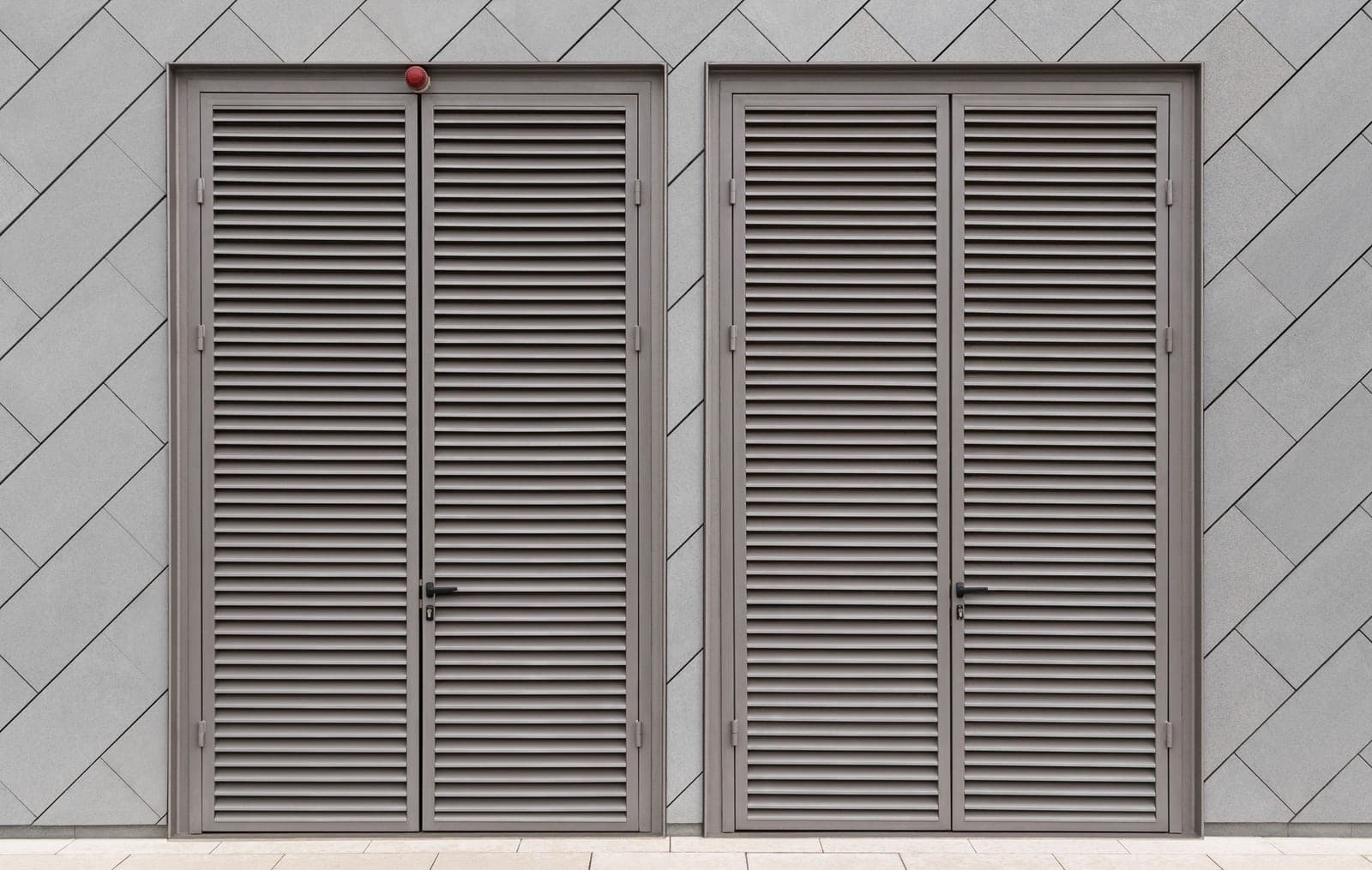
A louvered door is a frame filled with angled slats. The angle means you cannot see through it from standing height, so the shoes are visually hidden, but air passes through freely in both directions.
That matters because a shoe dries by evaporation, and evaporation stops when the air immediately around the shoe is saturated. In a sealed cabinet that happens within an hour and the shoe then stays damp for days. With louvers, the humid air keeps moving out and drier air keeps coming in, which is the whole mechanism.
It is not as effective as an open rack — nothing closed is — but it is the difference between a cabinet you can put damp shoes in and one you cannot. Our open rack versus closed cabinet comparison covers where each format wins, and louvers are the compromise that sits between them.
The cost is dust. Slats collect it in a way flat doors do not, along every edge, and they are tedious to clean. That is a real ongoing annoyance rather than a one-off, and it is the honest price of the ventilation.
Fifteen inches deep, which is the real constraint
At 15 inches this is the deepest cabinet in our registry by a wide margin — the narrow cabinets on this site are 9.4 to 9.5 inches, and the category norm for anything closed is around 11.8.
The depth buys something specific: an adult shoe lies flat, heel to toe, on every shelf. There is no tilting, no standing on edge, no shoe-size ceiling and no drawer front to foul on a size 13. For a household with large feet that is a genuine advantage, and our big feet page is the wider argument for it.
What it costs is hallway. In a hall at the 36-inch residential code minimum, 15 inches of cabinet leaves 21 inches of walkway. Twenty-four inches is roughly where two people stop being able to pass each other, so this cabinet does not belong in a corridor — it belongs in a room.
The footprint is 31 by 15 inches, or 3.23 square feet, which is more than double what the slim cabinets take. At 34 inches high it is also low enough to use as a surface, which partly earns that floor back.
The documentation problem
This cabinet scores 4 for documentation on our rubric, which is the lowest score any product in our registry carries, and it needs saying plainly.
Yaheetech publishes the external dimensions, the tier count and the fact that the tiers adjust. It does not publish a load rating for the top, a load rating for the shelves, a stated pair capacity, the internal shelf depth, the panel thickness or the product weight.
The missing top load is the one that costs you practically. At 34 inches high with a flat surface, this cabinet is obviously going to be used as a console for keys, post and a lamp, and there is no published figure telling you what it will take. Compare that with the wide VASAGLE four-door cabinet, which publishes 121 lb, or the narrow HOOBRO, which publishes 44 lb and a per-shelf figure as well.
The missing internal shelf depth matters less here than it would elsewhere, precisely because 15 inches of carcass takes any shoe flat. It is the one case in our registry where a missing internal dimension is not a practical problem.
None of this makes it a bad cabinet. It makes it a cabinet you cannot plan around on paper, which is a different failing and the one this site exists to flag.
Four adjustable tiers
The four tiers adjust, and on a 15-inch-deep carcass that is the combination that makes it genuinely good at boots.
Depth alone does not store a boot — a boot is defeated by height, not length, which is the argument our boots and tall shoes guide makes at length. Adjustable shelves on a deep carcass let you pull a shelf out entirely and give one bay the full height it needs, with everyday shoes lying flat on the remaining tiers.
That combination — deep, adjustable and ventilated — is rare. It is the specific case where this cabinet beats everything else we rank, and if it describes your household the missing load figures may be a price worth paying.
Where it sits against the alternatives
Against the wide VASAGLE four-flip-door cabinet: the VASAGLE is 9.4 inches deep against 15, holds a stated 16 to 28 pairs, publishes a 121 lb top and costs less. It is the better buy in almost every hallway. It does not ventilate and it caps shoe size.
Against an open rack or a mesh-shelf bench: those dry better and cost far less, and they put every muddy sole on display. The louvers are what you are paying for.
Against leaving a conventional cabinet door ajar on wet days: that genuinely works and is free. If you will actually remember to do it, you do not need this cabinet.
On our rubric: 8 for capacity, 8 for value, 6 for fit, 6 for build and the 4 for documentation. It is also the dearest cabinet in our registry, which is worth weighing against a specification sheet that tells you this little.
What we did not do
We have not assembled this cabinet, loaded it, or measured how much better a louvered door dries a shoe than a solid one. The ventilation argument above is physics and the published door design, not a test we ran. Where Yaheetech publishes nothing — load, capacity, weight, internal depth — this page says so rather than estimating, which is why it scores as it does.
The unit in question
The full specification, figure by figure
Top pick
Ventilated closed storageYaheetech 4-Tier Shoe Cabinet with Louvered Doors
Louvered doors on a 15 in deep carcass — closed storage that still lets air at the shoes, which most closed cabinets do not.
Key dimensions
- Width
- 31 in (79 cm)
- Depth
- 15 in (38 cm)
- Height
- 34 in (86 cm)
- Depth band
- Deep
Footprint 31 x 15 x 34 in (79 x 38 x 86 cm). Boots, and a comfortable seat depth.
Full specification
Source: Published 31 W x 15 D x 34 H in, Yaheetech 4-tier louvered shoe cabinet listing.
What the specs support
- Louvered doors are the one closed design that addresses the moisture problem
- 15 in (38 cm) of depth takes any adult shoe flat, heel to toe
- 34 in (86 cm) high is a usable surface without dominating the wall
- Adjustable shelves for boots
Limitations
- 15 in deep is the deepest cabinet here and takes real hallway
- No published load rating at all
- Louvers collect dust in a way flat doors do not
Skip this if
Your hall is under 40 in wide. Fifteen inches of cabinet in a 36 in hall leaves 21 in of walkway, which is uncomfortable.
Who it is forA wider entry or a mudroom where shoes go away damp and need to dry behind a door rather than in the open.
Frequently asked
Questions people actually ask
Do louvered shoe cabinets stop shoes smelling?
They address the cause. Smell comes from trapped moisture, and louvers let humid air out and dry air in. It is less effective than an open rack and far better than a sealed cabinet.
How deep is the Yaheetech 4-tier cabinet?
15 inches (38 cm), which is the deepest cabinet we rank. That takes any adult shoe flat, but leaves only 21 inches of walkway in a 36-inch hallway.
How many pairs does it hold?
Yaheetech does not publish a stated capacity, which is one of several figures missing from its specification. Four adjustable tiers at 31 inches wide is the only guidance the maker gives.
How much weight can you put on top?
Yaheetech publishes no load rating at all — not for the top, not per shelf. On a 34-inch cabinet that will obviously be used as a surface, that is the most useful missing figure.
Will boots fit?
Yes, and better than in most closed cabinets. Fifteen inches of depth plus shelves that adjust lets you give one bay full boot height while everyday shoes lie flat elsewhere.
Is it worth the price?
It is the dearest cabinet in our registry and the least documented. It is worth it if you specifically need closed storage that ventilates, and hard to justify if you do not.
Sources
Where these figures came from
- US shoe size to foot length charts — Foot length in inches by US women's and men's size, plus the published conversion formulas (women's = 3L - 21, men's = 3L - 22). Used for every depth calculation on this site.
- Average US shoe size, men — Reported average of US men's 10 to 11.
- International Residential Code minimum hallway width — 36 in minimum for a residential hallway; 36 to 42 in typical, 42 to 48 in comfortable.
- Yaheetech 4-tier louvered shoe cabinet published specification — 31 W x 15 D x 34 H in, four adjustable tiers, louvered doors. Yaheetech publishes no load rating, no stated pair capacity, no internal shelf depth and no product weight; those absences are recorded rather than estimated.
Read next
Where to go from here
Does a shoe cabinet need ventilation?
The moisture problem louvered doors are the answer to.
Open rack vs closed cabinet
Where louvers sit between the two formats.
Shoe storage for big feet
Why 15 inches of depth removes the shoe-size ceiling entirely.
Storing boots and tall shoes
Why adjustable shelves matter more than depth for a boot.
All shoe storage cabinets
Where this ranks against better-documented alternatives.