Guide
How many pairs of shoes will actually fit?
Every listing quotes a capacity, and every listing is optimistic. Here is how to work out the real number for your own household before you buy.
#ad — We earn a commission from qualifying purchases made through the Amazon links on this page, at no extra cost to you. It does not change what we recommend or the order we rank it in. Full disclosure.
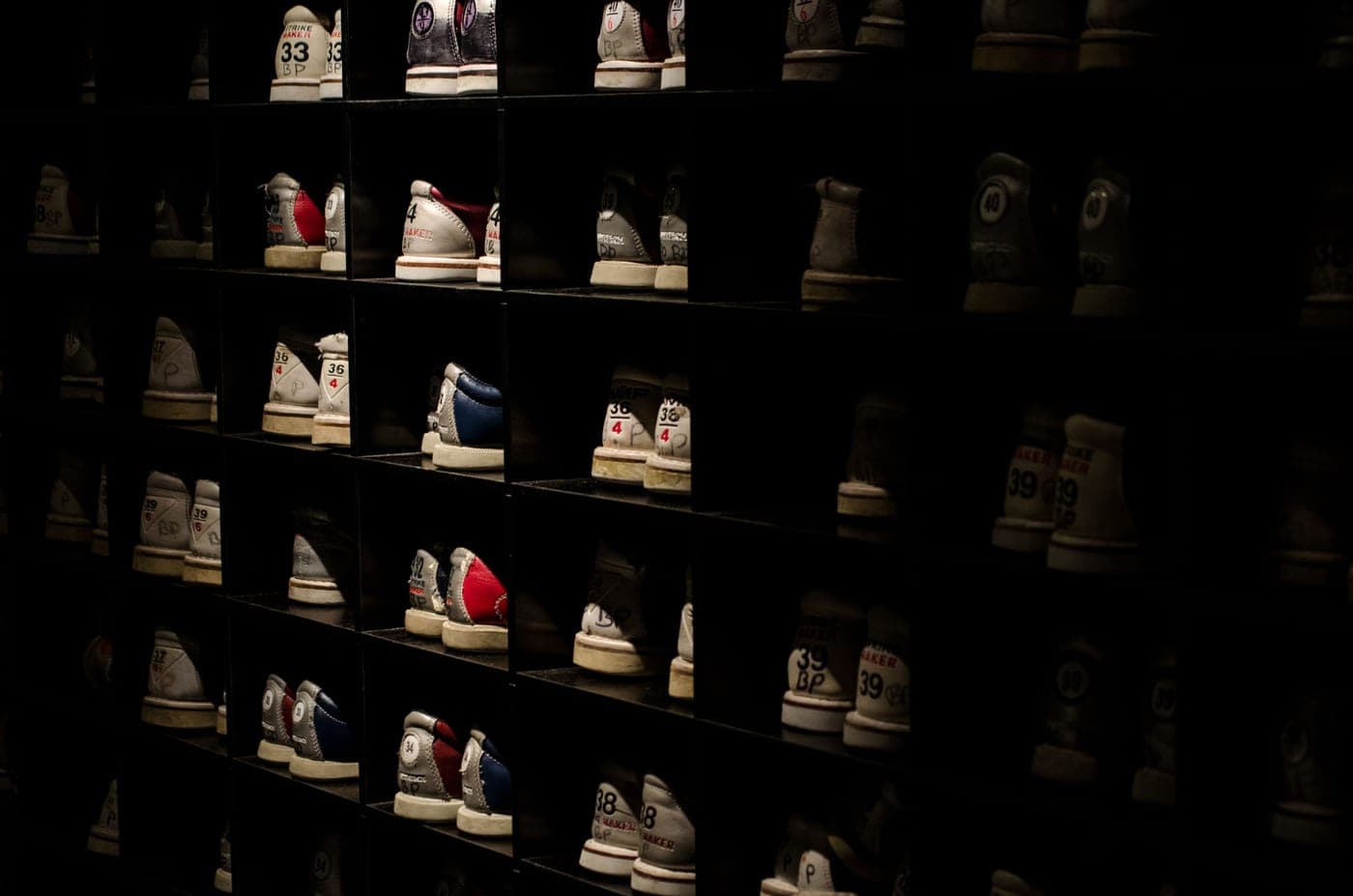
How do you work out real shoe storage capacity?
Count the pairs that actually live by the door, not the pairs you own. Then check the compartment against your largest shoe rather than your average one, because the largest is what fails to fit. Stated capacities are measured with smaller shoes than most households own.
Count what lives by the door
The number that matters is not how many pairs you own, it is how many are in circulation. Most households keep three to five pairs per person near the entrance — an everyday pair, a work pair, something for the weather, and whatever was worn yesterday and has not been put away.
Seasonal storage is a separate problem and should not be solved at the front door. Winter boots in July belong in a wardrobe or a loft, not taking a compartment in a hallway cabinet for four months.
The stated figure is measured with small shoes
Manufacturers quote capacities like 12 to 20 pairs, and the range is doing real work. The high end assumes women's shoes at around 9.7 inches of foot length; the low end assumes larger sizes and bulkier footwear.
For a household with an adult wearing a men's 11 or above, plan against the low end of every stated range, and check the largest shoe rather than the average. It is the largest one that fouls the drawer front and decides whether the cabinet works.
The one cabinet-style piece we rank that publishes its internal compartment size gives 6.75 by 5.5 by 13.75 inches per cubby. That 13.75-inch depth swallows a US men's 13 flat with room to spare. The 5.5-inch height is the constraint — it takes a trainer and does not take a boot.
Capacity per square foot, by format
The table makes the trade explicit. Flip-drawer and tall cabinets are three times more efficient than anything with a seat, because a seat is floor area spent on sitting rather than storing. That is not an argument against benches — it is an argument for being clear about which problem you are buying to solve.
The picks in full
Every pick, with the numbers behind it
Top pick
Most pairs per square footHOOBRO Tall Shoe Cabinet, 9 Tier (BG24SC01)
Twenty-four cubbies plus a tall compartment stacked into 12.4 in of depth — the best pairs-per-square-foot figure on this site.
Key dimensions
- Width
- 29.5 in (75 cm)
- Depth
- 12.4 in (31 cm)
- Height
- 59 in (150 cm)
- Depth band
- Standard
Footprint 29.5 x 12.4 x 59 in (75 x 31 x 150 cm). Adult shoes flat, heel to toe.
Full specification
Source: Published 29.5 W x 12.4 D x 59 H in, 24 cubes plus 1 large compartment, 3 hooks, 2.2 lb per cube, HOOBRO BG24SC01 listing.
What the specs support
- 24 cubes in 2.5 sq ft of floor is the densest storage here
- 12.4 in (31 cm) of depth takes an adult shoe flat rather than tilted
- The tall compartment is sized for boots the cubes cannot take
- Three hooks turn it into a partial hall tree
Limitations
- 2.2 lb per cube is a shoe, and only a shoe
- At 59 in (150 cm) tall it wants anchoring in a house with children
- Internal cube sizes are unpublished, so a size 13 is a gamble
Skip this if
You wanted somewhere to sit. This is 59 in of vertical storage with no seat at any point.
Who it is forA household with more shoes than wall, where going up is the only direction left.
Pick 2
A low console under a mirrorVASAGLE Shoe Cabinet with 4 Flip Doors (ULBC035)
Low, wide and 9.4 in deep with a 121 lb top — the only slim cabinet here strong enough to be furniture as well as storage.
Key dimensions
- Width
- 41.5 in (105 cm)
- Depth
- 9.4 in (24 cm)
- Height
- 32.6 in (83 cm)
- Depth band
- Ultra-slim
Footprint 41.5 x 9.4 x 32.6 in (105 x 24 x 83 cm). Tilted or on-edge storage only.
Full specification
Source: Published 9.4 D x 41.5 W x 32.6 H in, 16-28 pairs, 121 lb top / 13 lb per flip drawer, VASAGLE ULBC035B01 listing.
What the specs support
- 121 lb top rating is five times the slim cabinet — a genuine console surface
- 32.6 in (83 cm) high leaves wall clear for a mirror or hooks above
- 9.4 in (24 cm) deep despite 28 pairs of stated capacity
- Low and wide is far more stable than tall and narrow
Limitations
- 41.5 in (105 cm) needs a long wall
- Shoes sit on edge at this depth, which is hard on soft leather
- 13 lb per flip door
Skip this if
Wall length is your constraint rather than depth. There are 23 in wide cabinets here that hold nearly as many pairs.
Who it is forA hallway with a long uninterrupted wall, where the cabinet doubles as the console table under the mirror.
Pick 3
Households with many pairsPrepac 18-Pair Shoe Storage Cubbie Bench
Eighteen pairs across four feet of wall, and the only bench here that publishes the internal size of each individual cubby.
Key dimensions
- Width
- 48 in (122 cm)
- Depth
- 16 in (41 cm)
- Height
- 24 in (61 cm)
- Seat height
- 24 in (61 cm)
- Depth band
- Deep
Footprint 48 x 16 x 24 in (122 x 41 x 61 cm). Boots, and a comfortable seat depth.
Full specification
Source: Published assembled 48 W x 16 D x 24 H in and per-cubby internal 6.75 W x 5.5 H x 13.75 D in, Prepac shoe storage cubbie bench listing.
What the specs support
- Publishes each cubby at 6.75 x 13.75 x 5.5 in, so you can check your own shoes against it before buying
- 13.75 in of internal depth swallows a US men's 13 flat, heel to toe
- 18 pairs is roughly double what any bench above holds
- 5-year parts warranty is unusual at this price
Limitations
- 24 in (61 cm) high is a tall perch, not a comfortable bench seat
- No published weight capacity for a piece sold as a bench
- 48 in (122 cm) wide needs a dedicated wall
Skip this if
You want somewhere comfortable to sit. At 24 in the top is counter-adjacent height, six inches above the 18 in seat standard.
Who it is forA mudroom or garage entry where pair count beats seating, and a family of four keeps three pairs each by the door.
Frequently asked
Questions people actually ask
How many pairs of shoes should an entryway hold?
Three to five per person is what most households keep in circulation near the door. A family of four therefore needs 12 to 20 pairs of capacity, not the whole collection.
Are stated shoe capacities accurate?
They are measured with smaller shoes. If anyone in the house wears a men's 11 or above, plan against the low end of every stated range.
What stores the most shoes in the least space?
A tall nine-tier cabinet, at around ten pairs per square foot of floor. Benches manage about three, because a seat is floor area spent on sitting rather than storing.
Where should seasonal shoes go?
Not at the front door. Winter boots in summer should be in a wardrobe or a loft rather than occupying a hallway compartment for four months.
How do I know if my largest shoes will fit?
Measure the longest shoe you own and compare it with the compartment depth, not the cabinet's external depth. The largest shoe is what fouls a drawer front and decides whether the cabinet works.
Sources
Where these figures came from
- US shoe size to foot length charts — Foot length in inches by US women's and men's size, plus the published conversion formulas (women's = 3L - 21, men's = 3L - 22). Used for every depth calculation on this site.
- Average US shoe size, women — Reported average of US women's 8.5 to 9.
- Average US shoe size, men — Reported average of US men's 10 to 11.
- Manufacturer published specifications — Product figures quoted here are the manufacturers' own published dimensions and ratings, cited in full on the roundup this guide links to.
Read next
Where to go from here
The shoe cabinet roundup
Eight cabinets with their stated capacities.
Shoe cabinet depth, resolved
The shoe-length arithmetic in full.
Tall cabinet or bench storage?
The efficiency trade, decided.
Storing boots and tall shoes
The footwear that fits none of these compartments.
The 18-pair cubbie bench, reviewed
The one bench that publishes each cubby's interior, so you can check your own shoes.
Shoe storage for a large family
The capacity arithmetic here, resolved into ranked picks.
Cubby shoe storage benches
Where one pair per compartment makes stated capacity honest.