Guide
Anchoring entryway furniture
Tall and shallow is the shape of everything in this category and it is also the shape of something falling over. Which pieces need fixing, and what actually holds them.
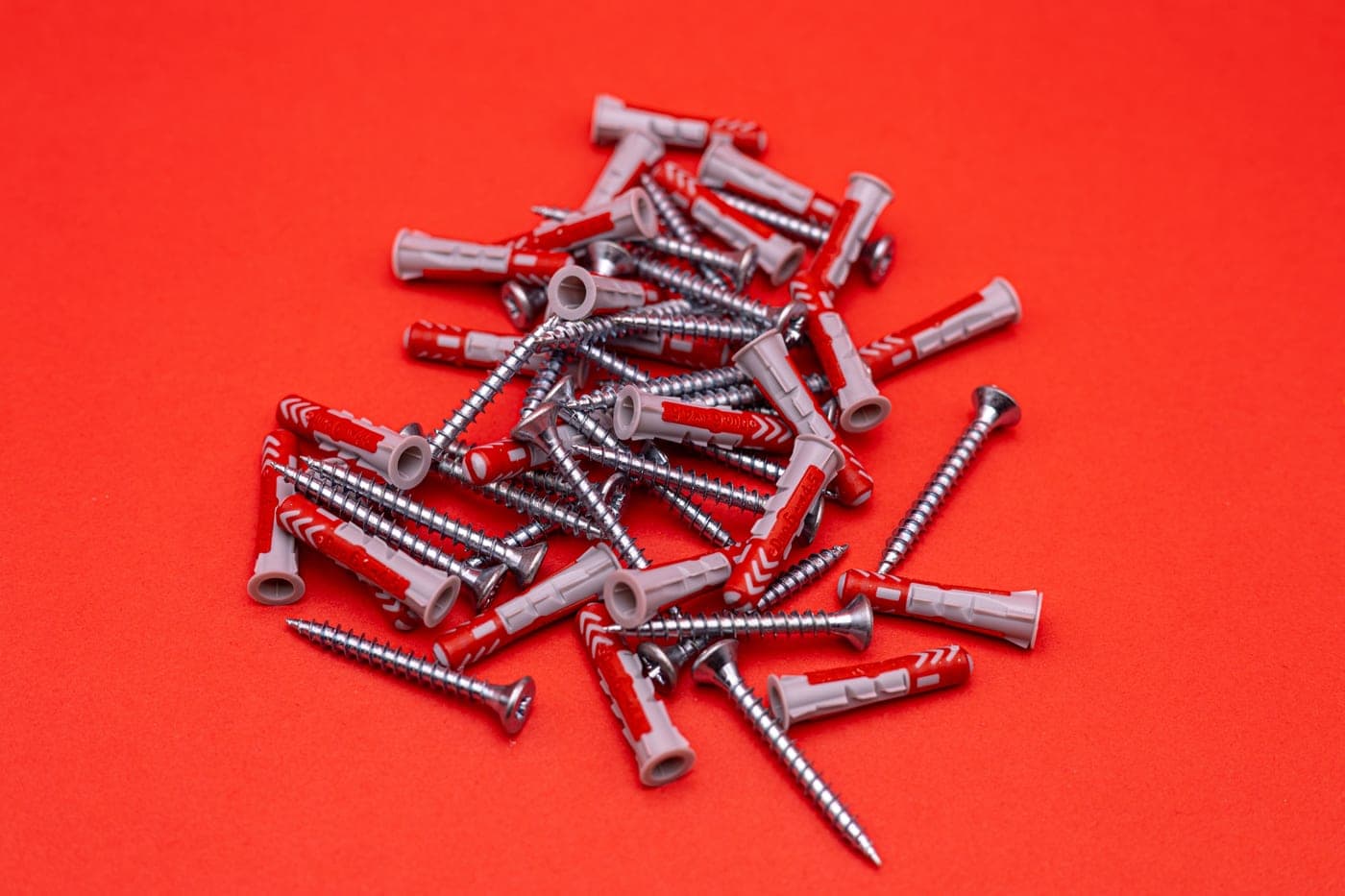
Does entryway furniture need to be anchored?
Anything over about 40 inches tall on a base under 14 inches deep does, without exception. That covers every hall tree we rank and three of the eight shoe cabinets. Low, wide benches do not — a 24-inch bench on a 16-inch base is stable by geometry.
This page carries no product picks. It is a safety page, and bolting a shoe cabinet onto it to make it earn would be the wrong instinct.
The geometry that decides
A piece of furniture tips when its center of mass moves outside its base. Tall and shallow means the base is small; loading the top means the center of mass is high. Both together mean a small push, or a child climbing, is enough.
One maker in our hall tree roundup states the requirement outright — five screws into the wall. That is unusually direct for this category, and it should be read as describing all of them rather than as a peculiarity of that model.
What actually holds
- Into a timber stud. The strongest and simplest fixing. Find the stud, use a screw long enough to get at least 1.5 inches into the timber, and the job is done.
- Into masonry. A plugged screw or a frame fixing into brick or block is very strong. Use the correct drill bit and do not overtighten into old, soft mortar.
- A rated cavity anchor. Toggle or spring-type anchors rated for the load work in plasterboard where no stud is available. Read the rating; it must exceed the loaded weight of the piece with margin.
What fails: plastic plasterboard plugs intended for picture frames, adhesive strips of any kind, and screws driven into plasterboard alone. All three will hold an empty cabinet indefinitely and let go the first time someone leans on a loaded one.
A specific caution for dot-and-dab construction, where plasterboard is stuck to masonry with adhesive blobs and a gap behind. A cavity anchor cannot expand in that gap and a short screw does not reach the masonry. You need a long frame fixing that passes through the board and the gap into the wall behind.
Fix it before you load it
The single most common way this goes wrong is doing it in the wrong order. Fitting a bracket to the back of a cabinet already full of shoes, against a wall, means emptying it and pulling it out again — so it does not get done.
Fit the bracket while the unit is light and lying down, position it, fix it, then load it. It adds five minutes at assembly and it is the difference between a job done and a job intended.
Frequently asked
Questions people actually ask
Does a hall tree need to be attached to the wall?
Yes, always. Every hall tree we rank is 68 to 72 inches tall on a base 11.8 to 13.8 inches deep, and one maker specifies five screws into the wall as a requirement.
Do shoe cabinets need anchoring?
Anything over about 40 inches tall on a base under 14 inches deep does. That covers three of the eight cabinets we rank. Low, wide benches do not.
What wall fixing should I use?
Into a timber stud if there is one, or a plugged screw into masonry. In plasterboard with no stud, use a toggle or spring anchor rated above the loaded weight of the piece.
Will adhesive strips hold a shoe cabinet?
No. Adhesive strips, plastic picture-frame plugs and screws into bare plasterboard all hold an empty cabinet and fail the first time someone leans on a loaded one.
What if I rent and cannot drill?
Buy a different shape. A cubby bench 24 inches tall on a 16-inch base is stable without fixing and holds more shoes than a hall tree.
Sources
Where these figures came from
- Manufacturer published specifications — Product figures quoted here are the manufacturers' own published dimensions and ratings, cited in full on the roundup this guide links to.
- International Residential Code minimum hallway width — 36 in minimum for a residential hallway; 36 to 42 in typical, 42 to 48 in comfortable.
Read next